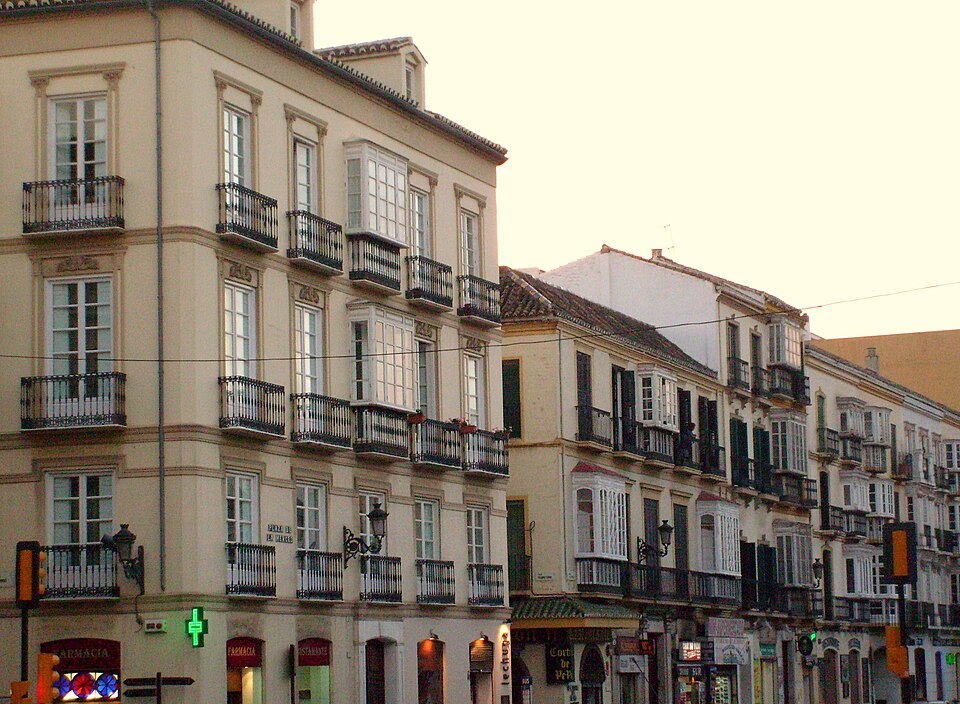
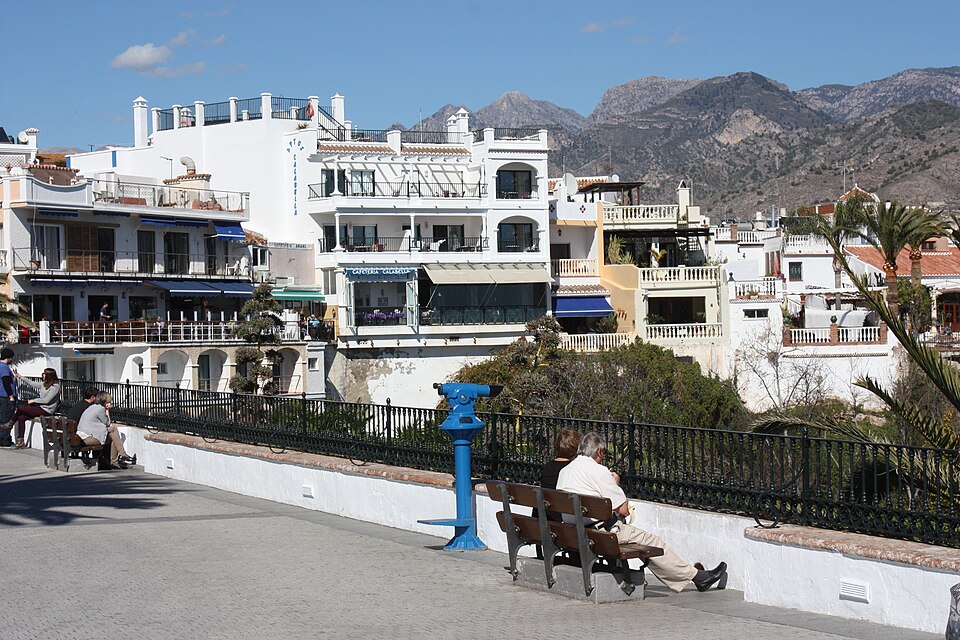
The practical basics for a smooth trip to Málaga and Costa del Sol — how to get here, how to get around, when to come, and the small local things worth knowing.
Hola! I'm Sofía Reyes Jones, Co-Founder of Málaga Tours & More. My friends call me Sofie — and I would love it if you did too.
I created Málaga Tours & More to be the largest site of its kind in Spain — which it now is — but, more than that, to be your trusted go-to destination for what I hope will be many happy returns to Málaga city and Costa del Sol over the years. It brings together more tours, tickets and experiences than anywhere else on the coast, in one place you can rely on, with technology and thoughtful touches that make discovering it all fun, varied and rewarding.
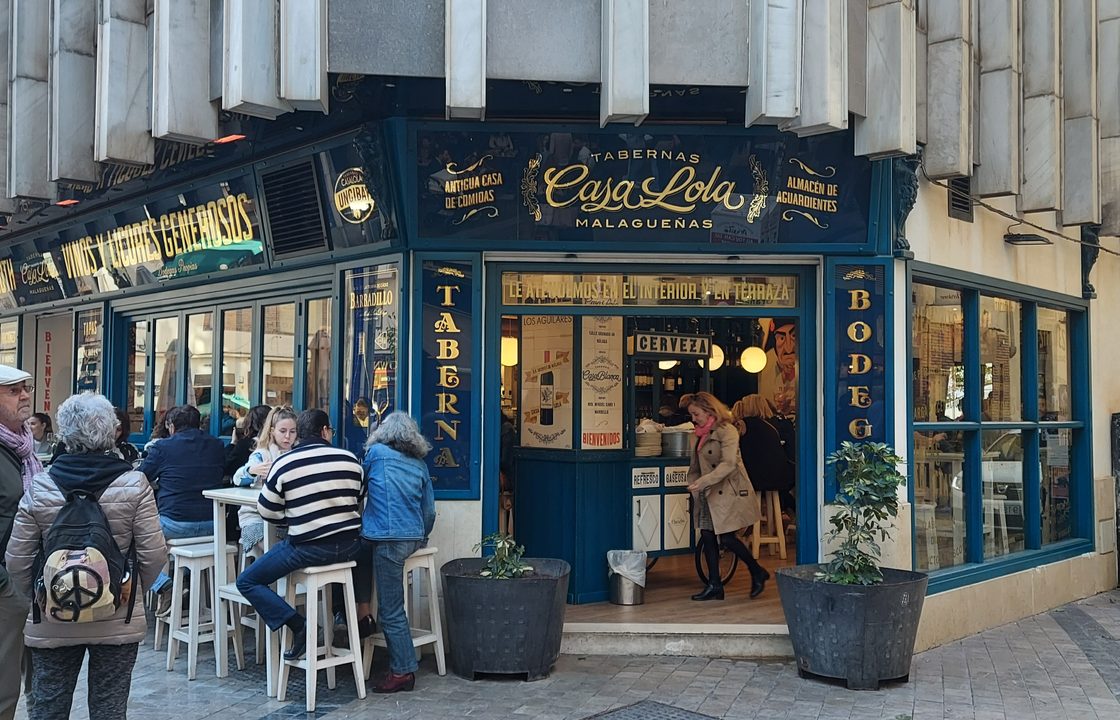
Think of this corner of the site as our own little travel diary — the small things that make local life here so special, the ones I most love to share. From my favourite chiringuito in Los Boliches, Fuengirola, to Casa Lola, the taverna in Málaga city centre where you could find me on many weekends with my best friends Paqui and Paco. If Paqui and Paco sound familiar to you, that's because they're the site's AI Tour Assistants I've fashioned after my best friends. And yes, those are the real Paqui and Paco in the AI avatar — down there in the lower right of your screen!
This section won't be static: like any personal diary it grows over time, as I recall past experiences and add new ones alongside you.
Travel is one of my great passions, next to music — I once spent two months visiting twenty-one cities across eighteen countries, touching almost every continent, and that was just one trip. I hope a little of that love comes through here, and helps fill your own journey with very special memories for years to come.
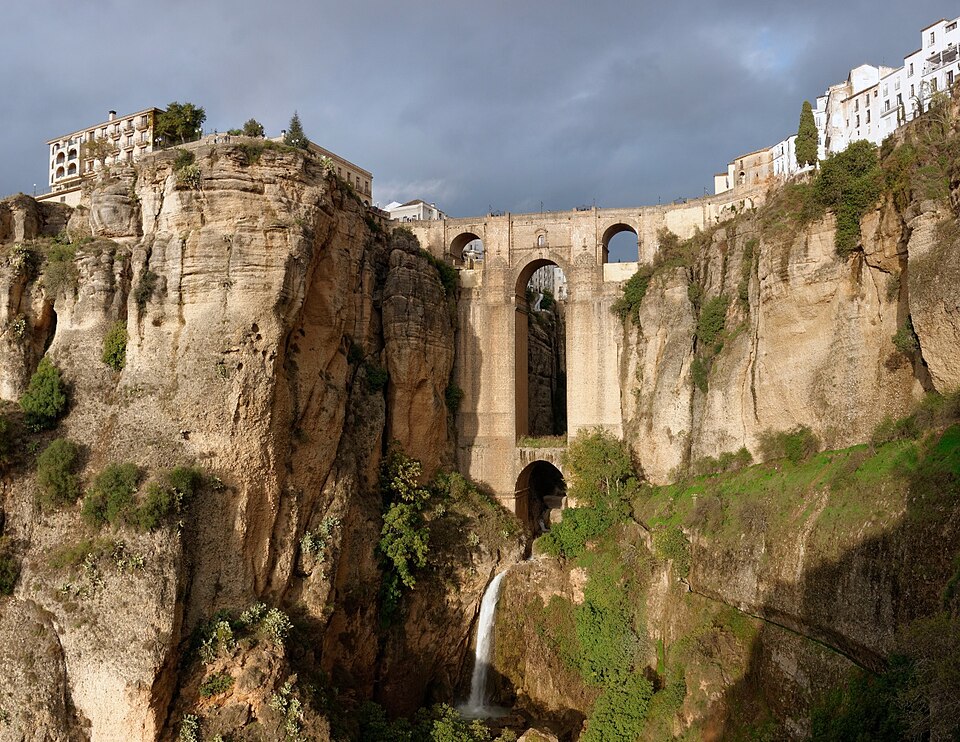
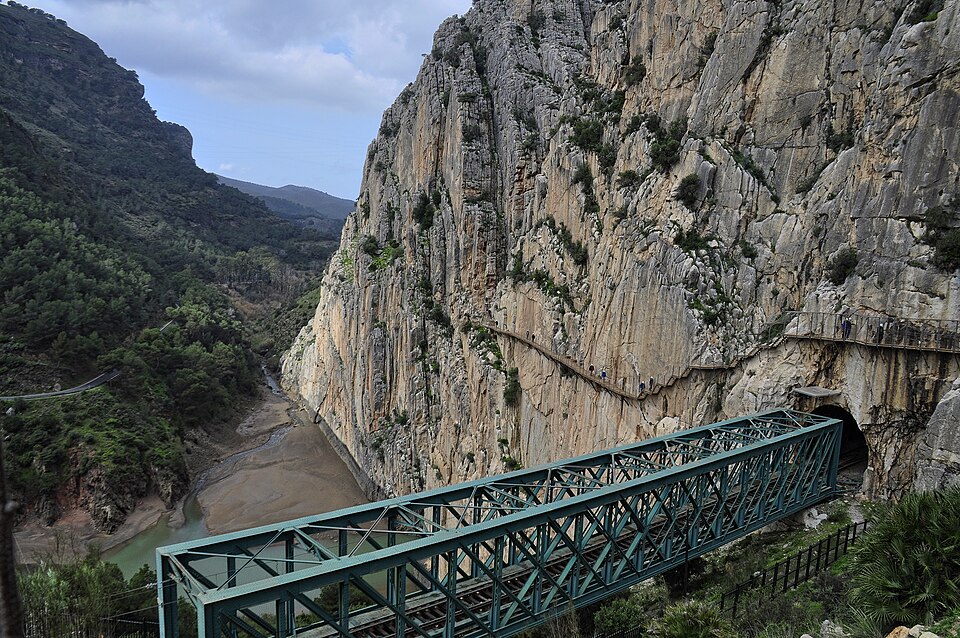
Two to three days covers Málaga city itself — the old town, the Alcazaba and Gibralfaro castle, the Picasso Museum and a long lunch by the port. With 5–7 days you can add the best of the coast and a couple of day trips (Ronda, the Caminito del Rey, Nerja). For a beach holiday, a week in one resort with two or three excursions is the classic Costa del Sol trip.
Base yourself in Málaga city for culture, tapas and a car-free trip, or on the coast for a beach holiday. The coastal train (below) is frequent enough that you can stay in the city and still reach the beach towns, or the other way round.
A quick steer on the main bases: Málaga city for old-town atmosphere and museums; Marbella for glamour, beach clubs and golf; Fuengirola and Torremolinos for easy, good-value family beaches right on the train line; Benalmádena for the marina and families; Nerja for a quieter, prettier east-coast base; and Estepona for an authentic, increasingly upscale town. See the full where-to-stay guide for our honest pick of hotels in each area.
Málaga–Costa del Sol Airport (AGP) is the gateway to the whole coast and one of Spain's busiest, with direct flights from across Europe. It sits just 8 km west of the city, between Málaga and Torremolinos.
The cheapest and often fastest way in is the C-1 Cercanías train from the airport's own station: about 12 minutes to Málaga Centro one way, and the other way to Torremolinos, Benalmádena and Fuengirola, running roughly every 20 minutes. The A Express bus also runs to the city centre. Taxis and pre-booked transfers wait outside arrivals at a fixed city-centre tariff.
For Marbella, Estepona and Nerja — off the train line — use a direct airport bus, a taxi or a pre-booked transfer, or hire a car at the airport if you plan to roam.
Travelling in style, or in a group with luggage? We also list premium and private transport — executive cars, chauffeur-driven vans and door-to-door airport transfers — over on Tours & More transport.
The C-1 coastal train is the spine of the western coast — cheap and frequent from Málaga through the airport, Torremolinos and Benalmádena to Fuengirola. Beyond Fuengirola (Marbella, Estepona) and east to Nerja there is no train: the Avanza/Portillo intercity buses along the A-7 are the reliable budget option.
In Málaga city you won't need a car — the centre is compact and walkable, and parking is easier left in a garage. There's a growing metro, plentiful city buses, cheap taxis, and dockless bike and e-scooter hire. A hire car pays off only if you want the white villages, Ronda or beaches off the train line.
Costa del Sol earns its name with about 300 days of sunshine a year and mild, bright winters. The sweet spots are May, June, September and early October: warm, sunny and far calmer than peak summer, with the sea at its warmest in September.
Jul–Aug are hottest, busiest and priciest, with warm sea and a real buzz. Apr–May bring wildflowers, green hills and perfect sightseeing weather. Nov–Mar are mild by northern-European standards — often high-teens Celsius by day — which is why the coast fills with long-stay northern visitors all winter. Rain, when it comes, is mostly a few short spells in late autumn and winter.
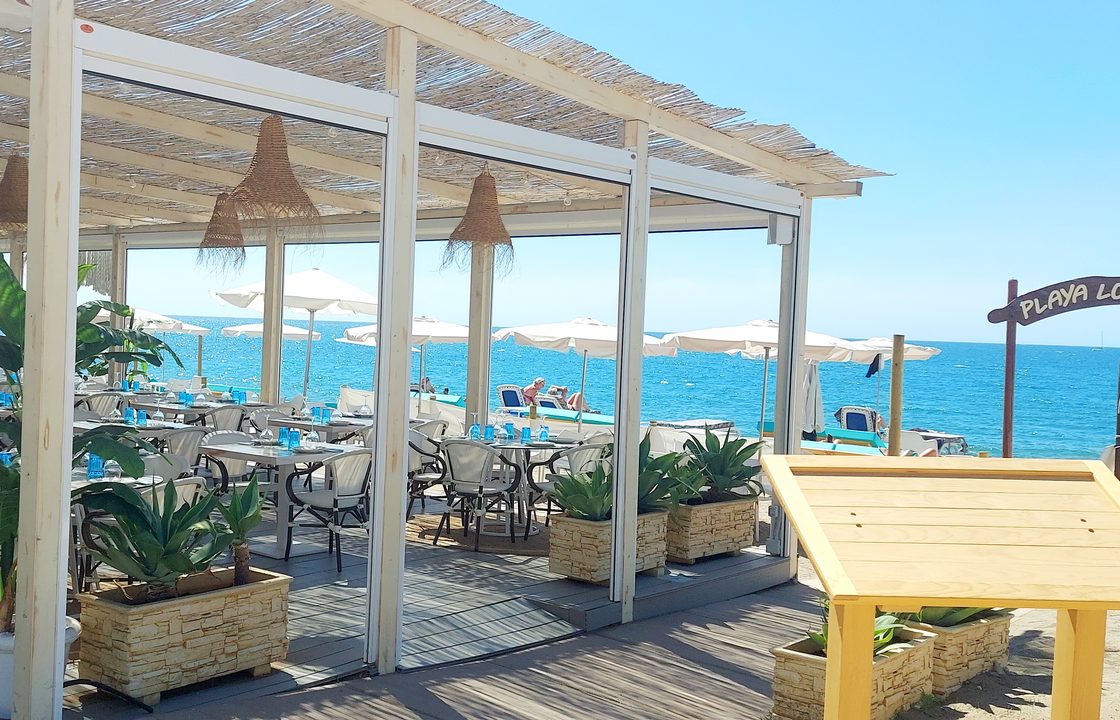
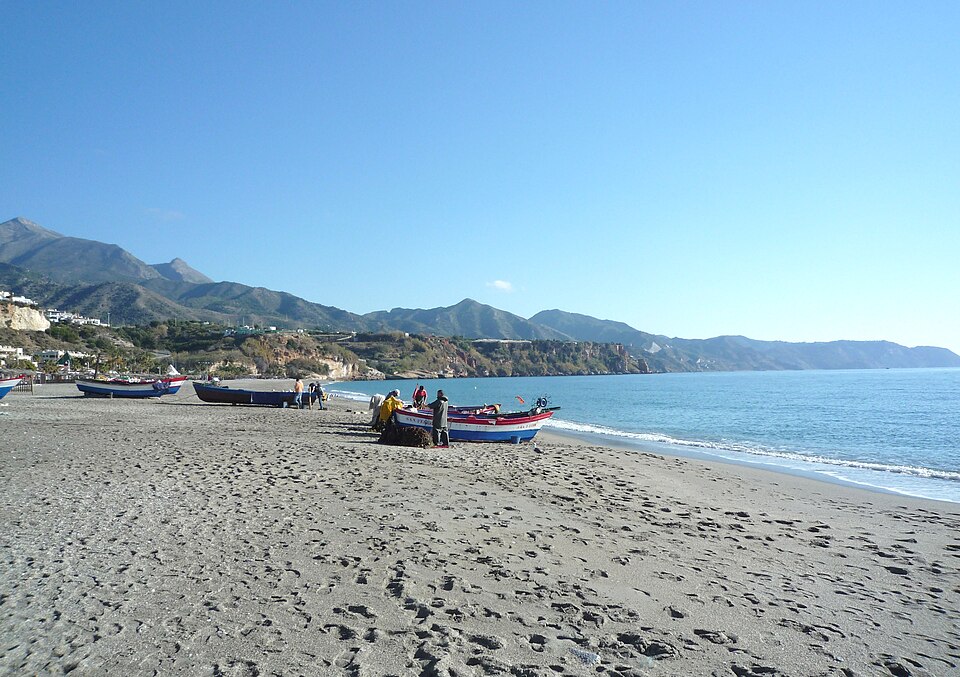
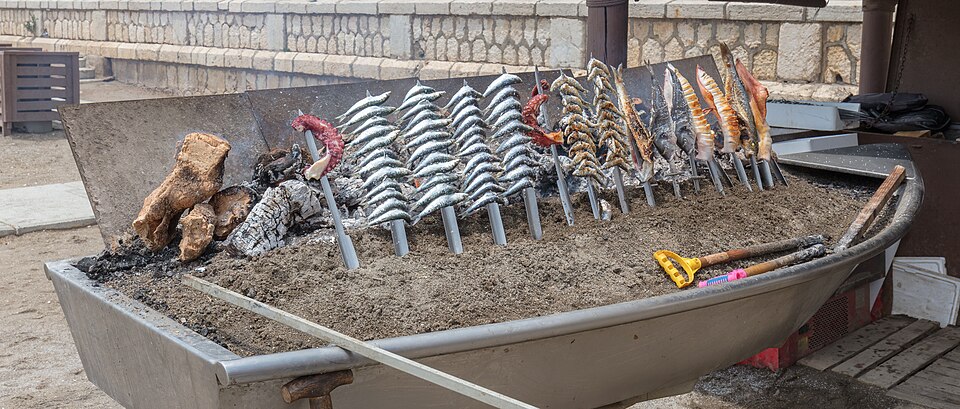
The coast is one long run of golden-grey beaches, most with an easy promenade, sunbeds and chiringuitos — beach restaurants where you order the espeto de sardinas, sardines grilled over a driftwood fire in a boat of coals. Many fly the Blue Flag for cleanliness and facilities. The Mediterranean here is calm and swimmable roughly May to October, warmest in late summer. Here's where to head, town by town.
La Malagueta is the city beach — a wide crescent of dark sand right beside the centre and the port, lined with palms and chiringuitos. East of it, the old fishing quarters of Pedregalejo and El Palo have smaller, more local coves and the city's best espetos. West of the centre, La Misericordia is long, flat and family-friendly. All are reachable on foot, by bus or bike.
Torremolinos has two long Blue-Flag beaches: Bajondillo below the old town and, around the headland, La Carihuela — a former fishing village with the coast's best seafood restaurants along the sand. Playamar stretches east toward Benalmádena. It's all backed by an easy promenade and served by the coastal train. Browse Torremolinos hotels.
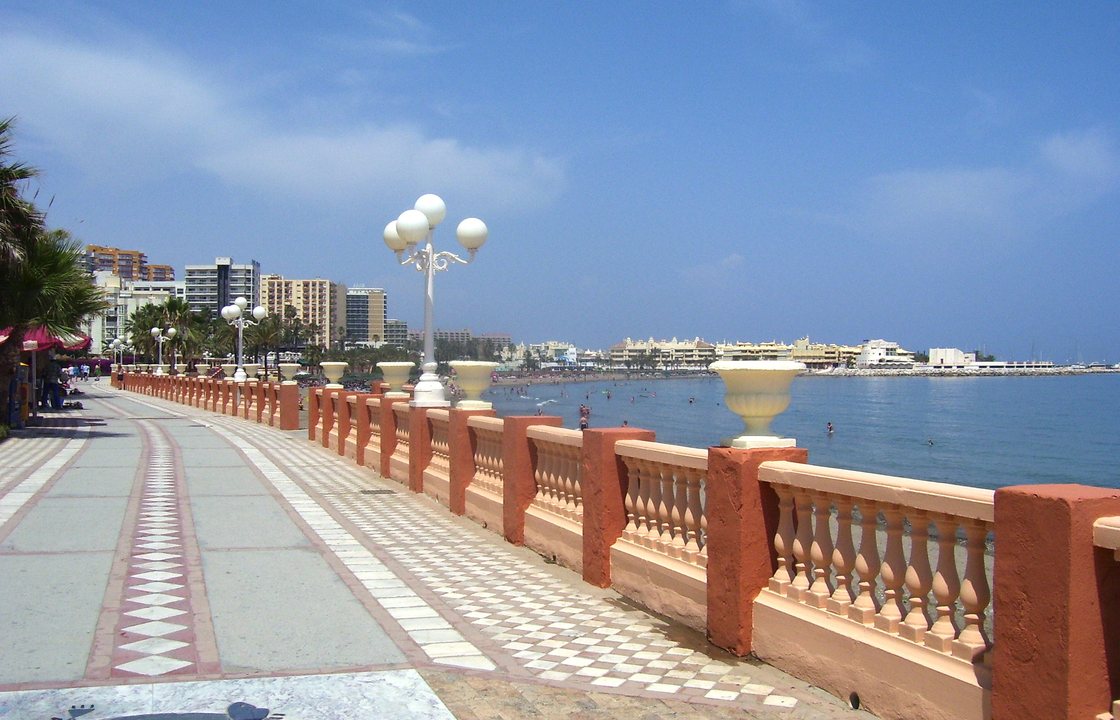
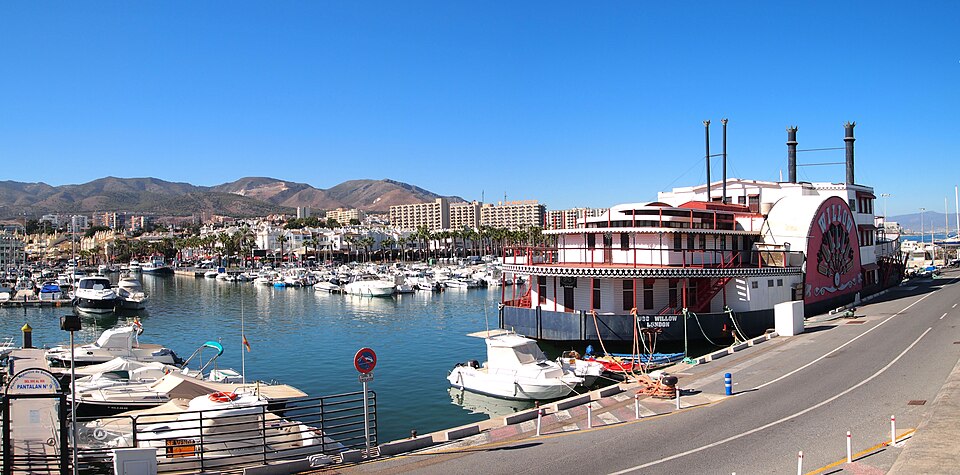
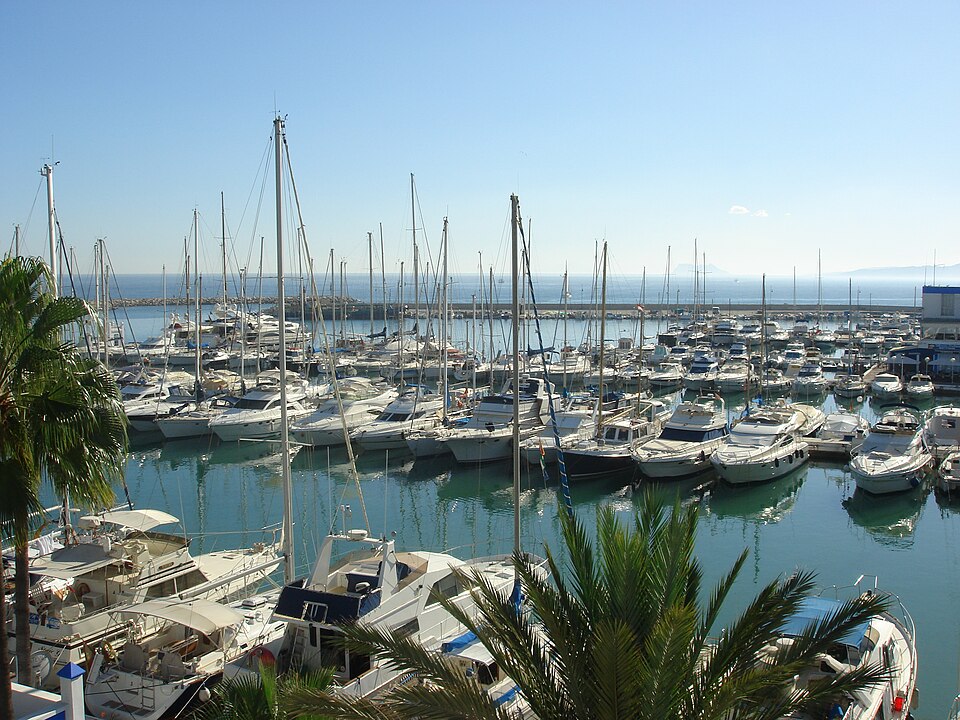
Benalmádena Costa runs several tidy, family-friendly beaches — Bil-Bil, Santa Ana and Malapesquera — a short walk from the lively Puerto Marina with its bars, boat trips and restaurants. Sheltered water and gentle shelving make it a solid choice with young children. See Benalmádena hotels.
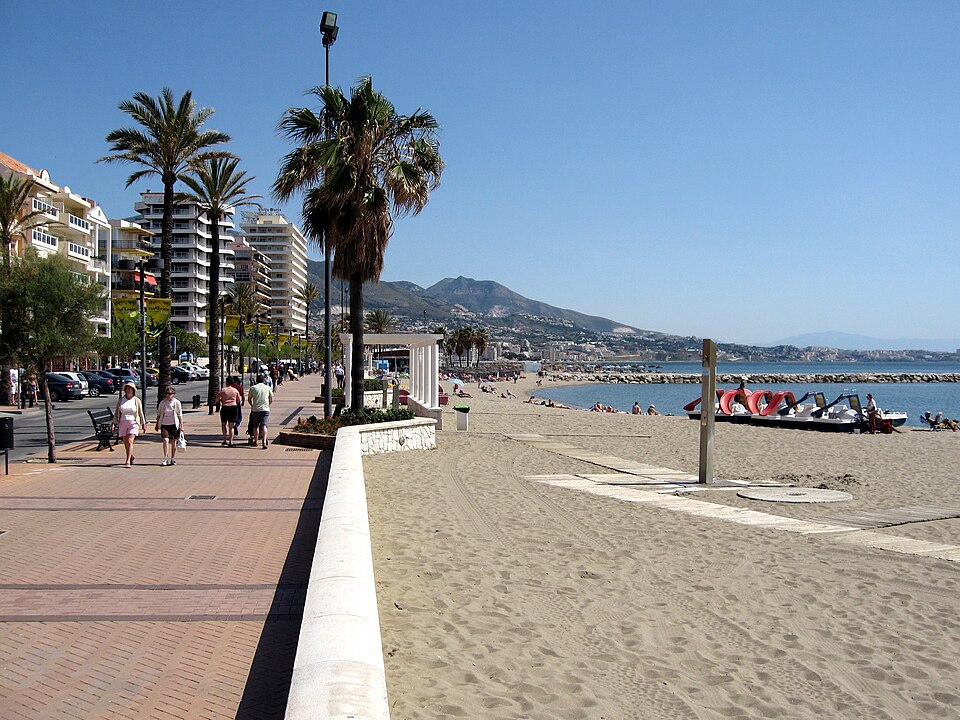
Fuengirola has an 8 km promenade and one long, wide beach broken into named stretches (Los Boliches, Fuengirola centre, Torreblanca). It's flat, clean, dependable and hugely popular with families and Nordic visitors, with the train and everything walkable. See Fuengirola hotels.
Marbella's beaches run for miles either side of town. Central beaches like La Fontanilla and El Faro are walkable from the Old Town; east toward Elviria the sands get softer and the famous beach clubs appear. West lies Puerto Banús for the marina scene. Chic but still very swimmable. See Marbella hotels.
On the quieter eastern Axarquía coast, Nerja trades long strands for pretty coves: Burriana (the biggest, with watersports and chiringuitos), Calahonda below the Balcón de Europa, and the wild, protected Maro coves just east. Clear water, cliffs and a low-rise, authentically Spanish feel. See Nerja hotels.
Estepona has a long, well-kept beachfront promenade and wide sands like La Rada right by the flower-filled old town, plus quieter stretches and top beach resorts spread toward Marbella. Relaxed, authentic and increasingly upscale. See Estepona hotels.
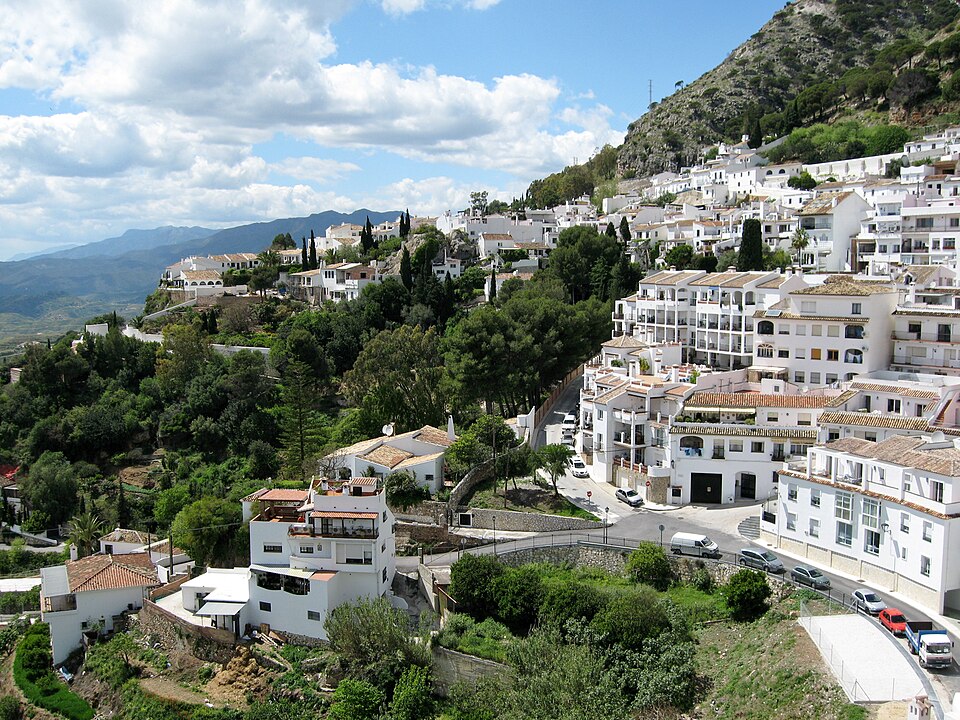
Below the white village of Mijas Pueblo, Mijas Costa runs a long, sunny beach on either side of La Cala de Mijas — a laid-back resort village with a Blue-Flag beach, a walkable promenade of chiringuitos and some of the coast's best golf just behind. Quieter sands like El Bombo and the dune-backed Cabopino lie toward Marbella. See Mijas hotels.
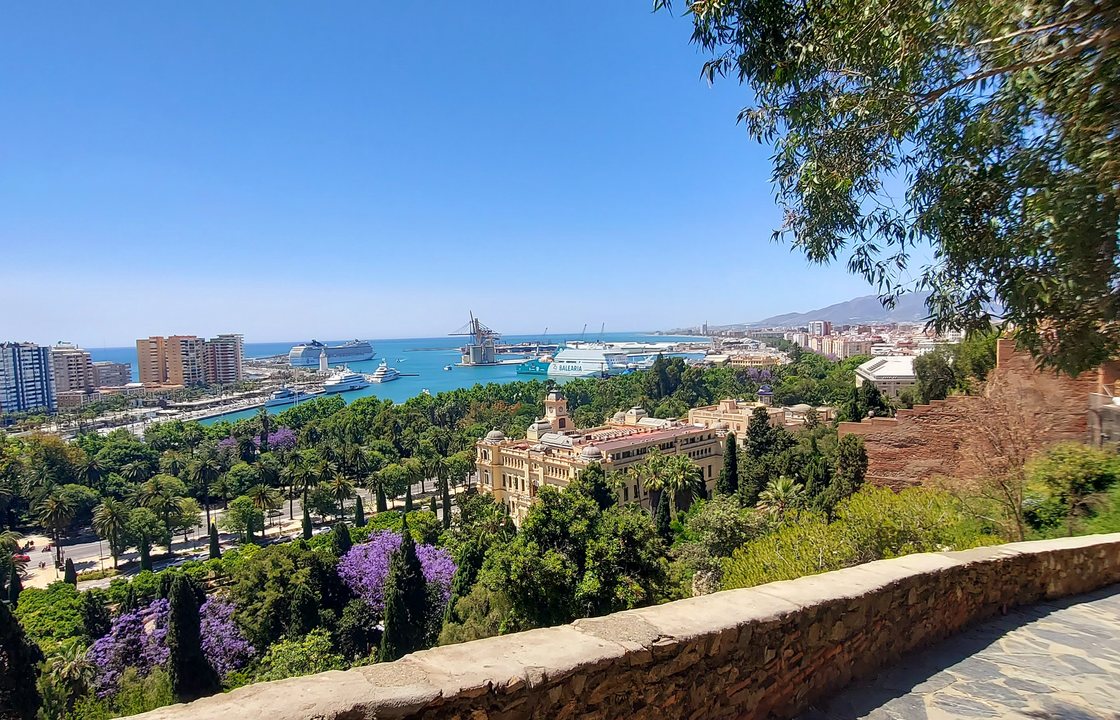
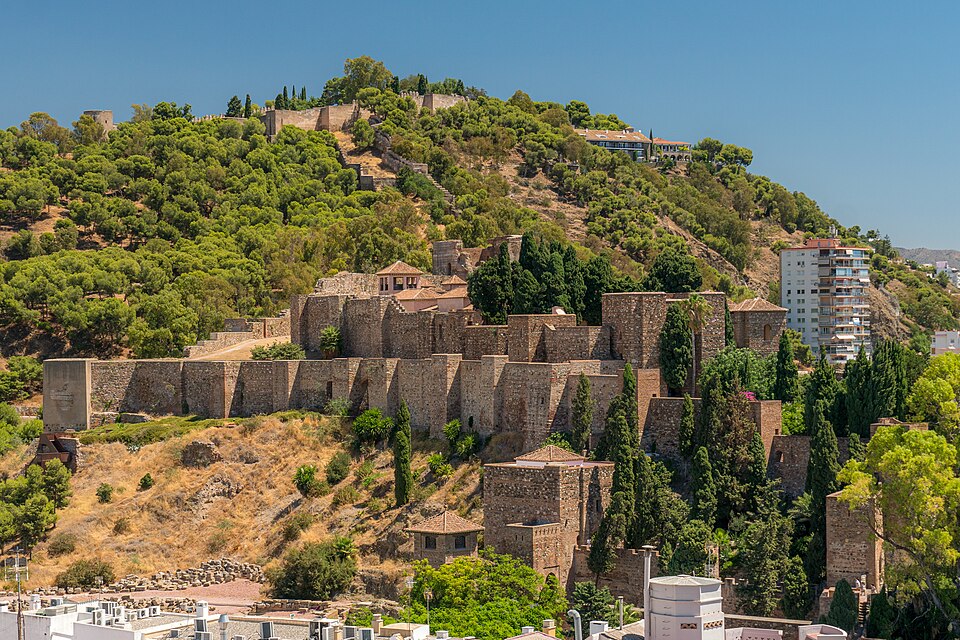
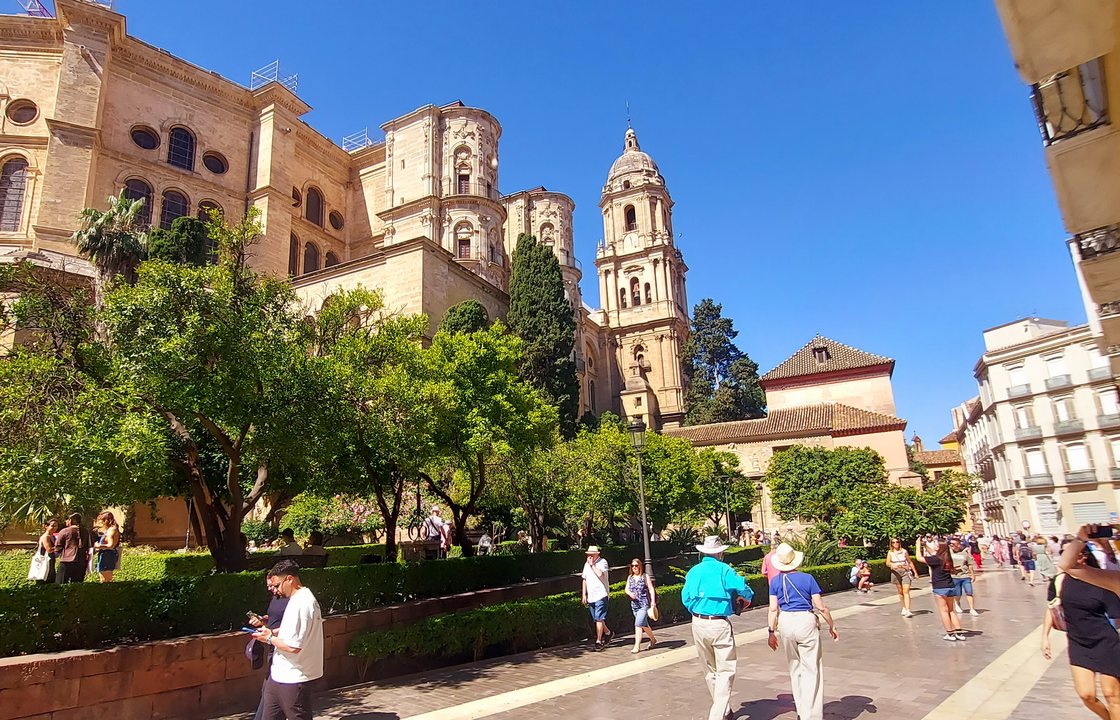
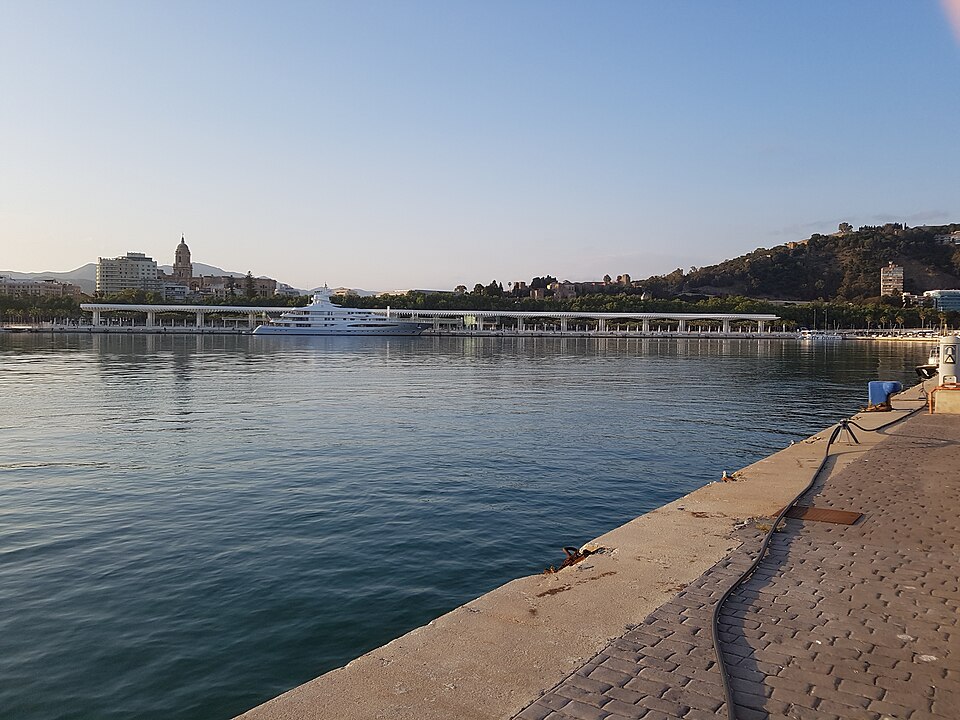
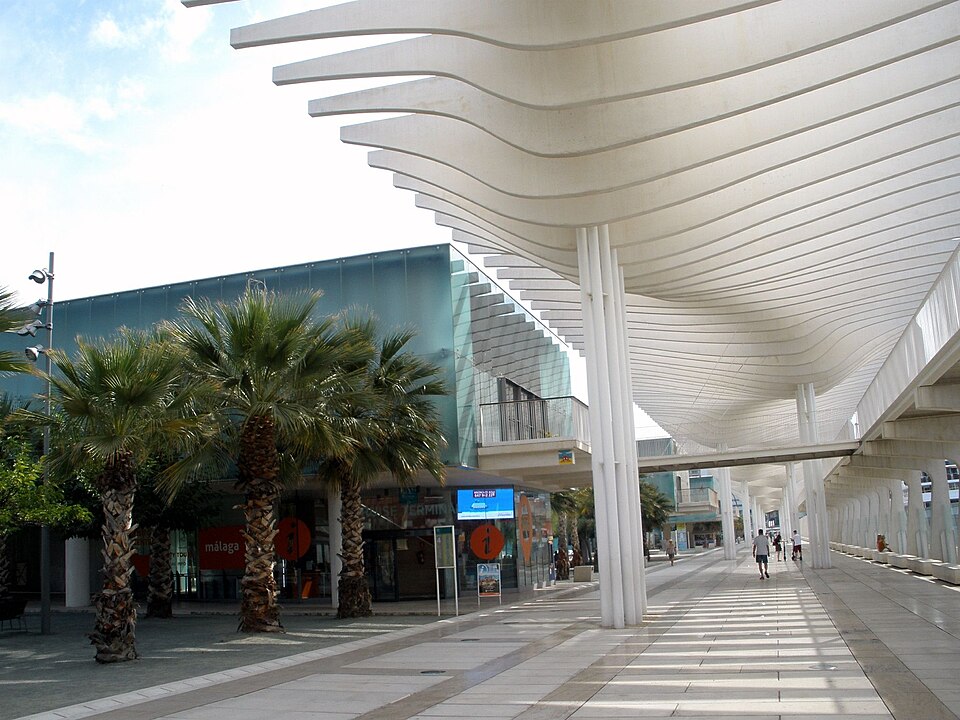
Climb the Moorish Alcazaba and Gibralfaro castle for the view over the port; see the Picasso Museum in the artist's home city and his birthplace on the Plaza de la Merced; walk the rooftop of the Cathedral ("La Manquita"); browse the Atarazanas market; and stroll the palm-lined Muelle Uno port with the colourful Centre Pompidou cube. Our travel guides and tours & tickets cover each in detail.
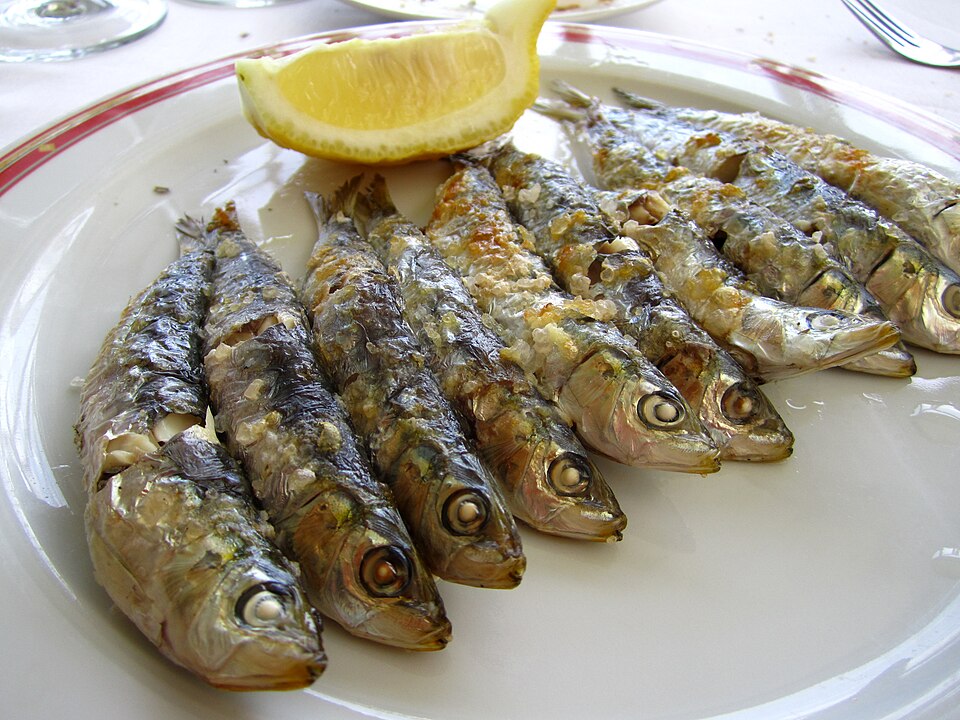
Eat by the sea and order espetos (grilled sardine skewers), pescaíto frito (fried fish), fresh boquerones (anchovies), and gambas. Inland, try porra antequerana, a thick cold tomato soup. Málaga's own sweet Moscatel wine is poured in the century-old Antigua Casa de Guardia. In summer everyone drinks tinto de verano (red wine and lemon soda) over ice. Book a food & tapas tour to find the good bars fast.
Málaga city — culture, tapas, museums, no car needed. Marbella — glamour, golf, beach clubs, Puerto Banús. Fuengirola — easy, flat, family-friendly, great value, on the train. Benalmádena — marina, family attractions, nightlife. Torremolinos — long beaches, relaxed, welcoming, central on the coast. Estepona — pretty, authentic, upmarket-but-calm. Nerja & the east — coves, cliffs, quieter and more Spanish. Mijas — a white mountain village above the coast. Compare on the hotels hub.
Spain uses the euro (€). Cards (and Apple/Google Pay) are accepted almost everywhere; carry a little cash for small chiringuitos, markets and tips. The coast is good value by Western-European standards — a menú del día lunch runs a few euros, and a caña (small beer) or coffee is cheap.
Tipping is modest and optional: round up or leave 5–10% for good restaurant service, a euro or two for a taxi or a few drinks. There's no pressure to tip as heavily as in the US.
Málaga and Costa del Sol are very safe for visitors, including solo and family travellers; violent crime is rare. The main risk is pickpocketing in the busiest tourist spots and on packed transport — keep bags zipped and phones off café tables. Emergency number across Spain is 112. Tap water is safe to drink, though many locals prefer bottled for taste.
English is widely spoken in the resorts, but a little Spanish is warmly received. The basics: hola (hello), gracias (thanks), por favor (please), una caña (a small draught beer), la cuenta, por favor (the bill, please), ¿dónde está…? (where is…?). Andalusians speak fast and drop the odd consonant — smile, and they'll meet you halfway.
It's an easy city with children — flat around the centre, safe to walk, and packed with family days out. Beyond the beaches, think Tivoli World and Bioparc Fuengirola, the Benalmádena cable car and Selwo, boat trips and the interactive museums. See our Málaga with kids guide and family attraction tickets.
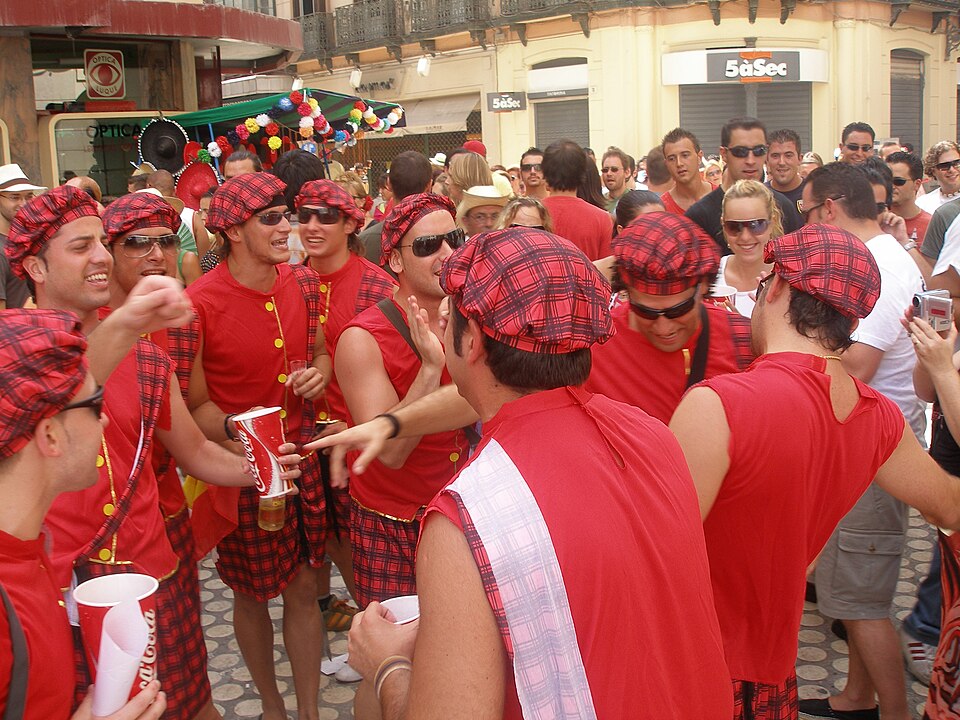
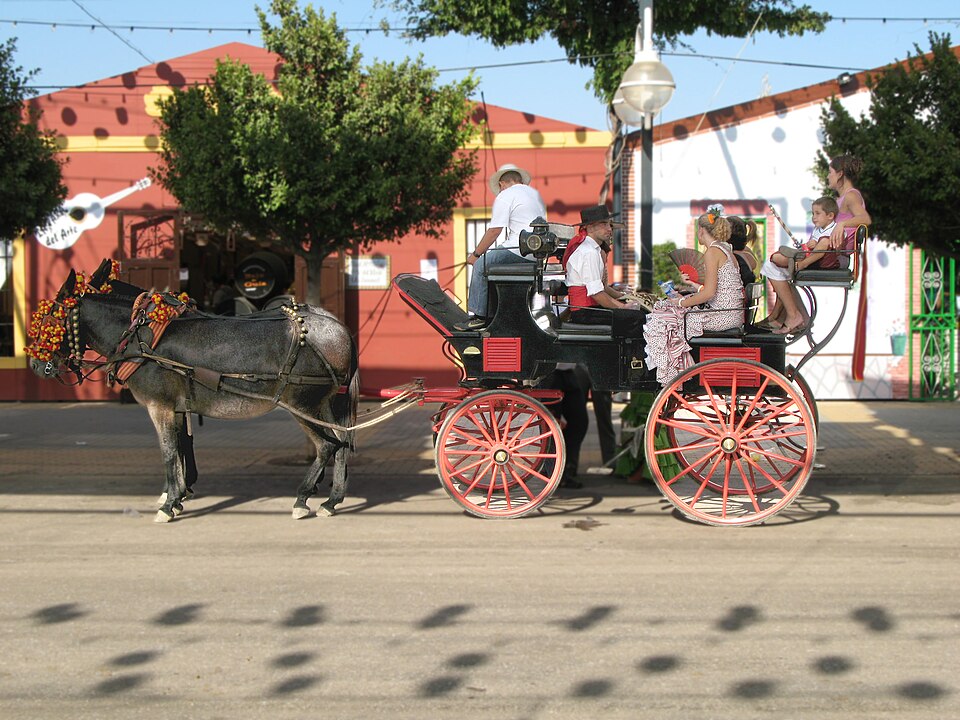
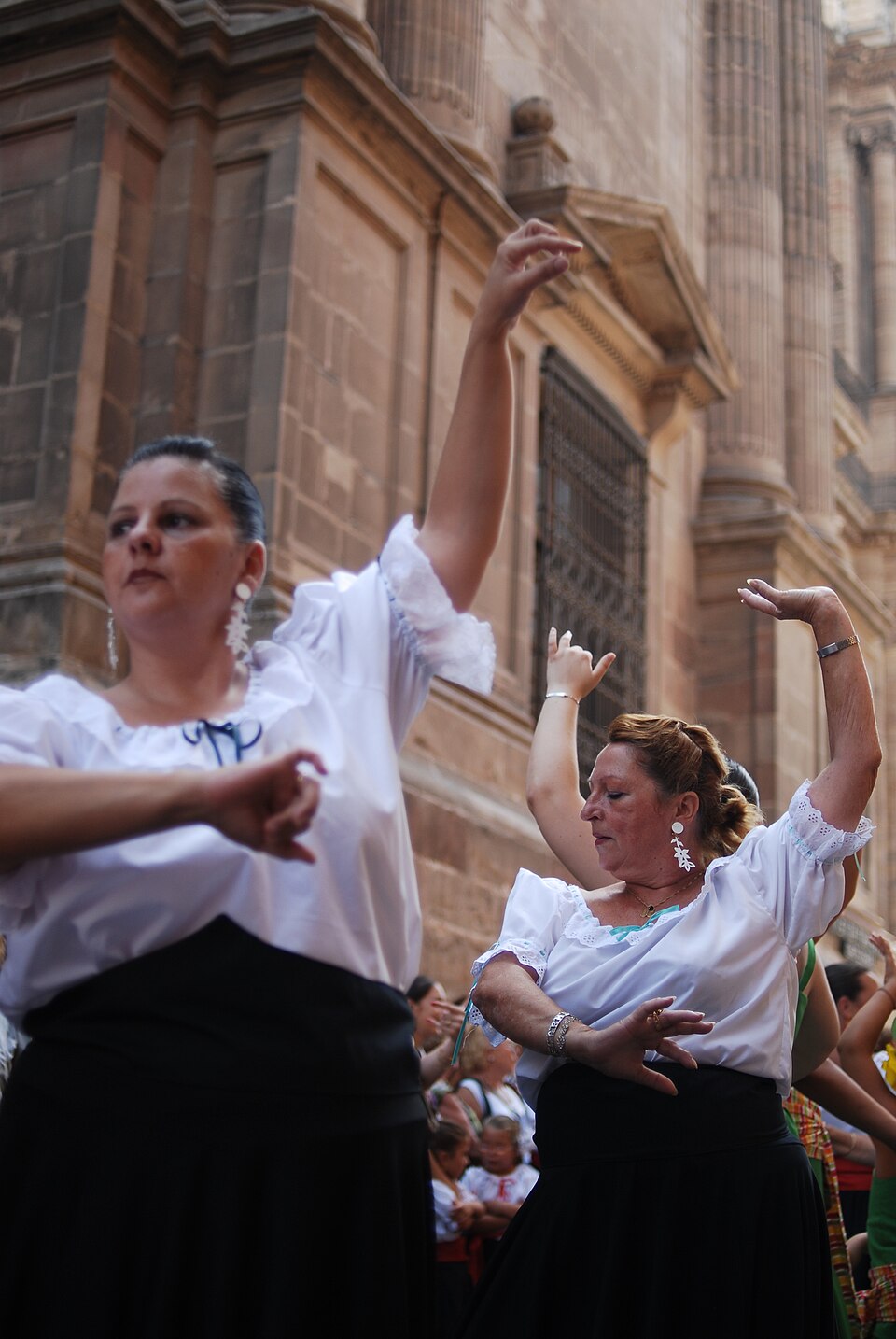
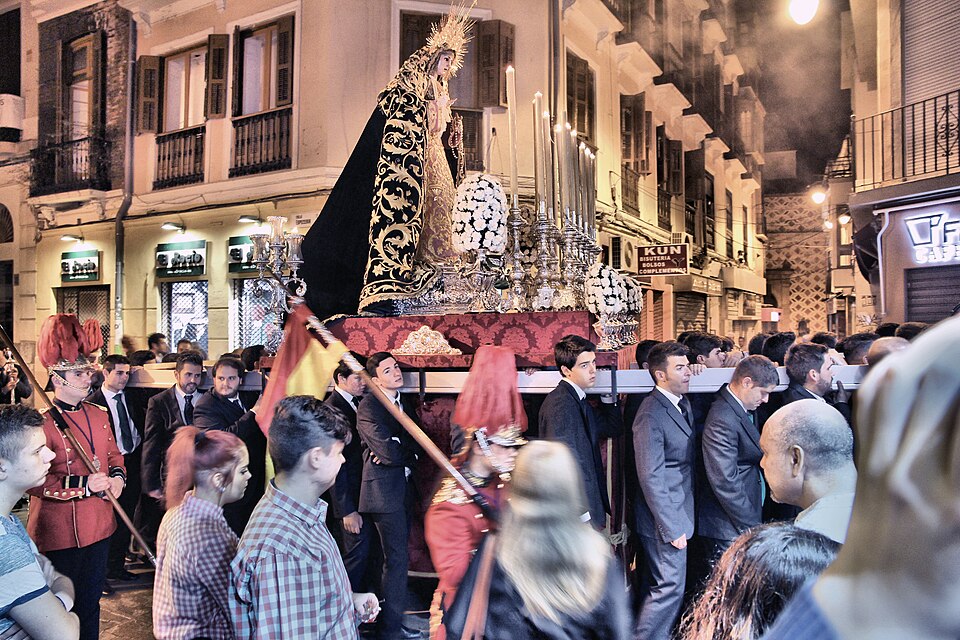
The big one is the Feria de Málaga in mid-August — nine days of flamenco, horses, fino and street parties (fun, but book beds early). Semana Santa (Holy Week, spring) brings spectacular processions. New Year's Eve, the Three Kings parade (5 Jan) and Málaga's summer Noche en Blanco arts night are all worth catching if the dates line up.
Sun protection year-round (hat, high-SPF, sunglasses) and light layers; a light jacket for winter evenings and sea breezes. Comfortable shoes for old-town cobbles and the Alcazaba's ramps, plus water shoes for the pebblier coves. Modest cover-up for churches. In July–August, less is more — and a refillable water bottle.
Meals run late: lunch is the big one, from about 2pm, and dinner rarely starts before 8:30–9pm. Many shops still close for a midday siesta break, though big stores stay open. Lingering at the table after eating — the sobremesa — is a way of life, not bad service. Greet with two cheek kisses (right cheek first) and don't rush; the coast runs on its own relaxed clock.
Costa del Sol has been a home-from-home for northern Europeans for decades, and each town has its own flavour. Fuengirola and Los Boliches host a strong Nordic community — Finnish, Swedish, Danish and Norwegian — with Scandinavian churches, schools, shops and cafés. Benalmádena, Torremolinos and Mijas Costa are long-time British favourites, with British bars, Sunday roasts and supermarkets stocking home comforts.
Further west, Estepona and the New Golden Mile draw large German and Dutch contingents, while Marbella is genuinely international — British, Scandinavian, Middle-Eastern and Spanish jet-set side by side. Wherever you base yourself you'll hear your own language and find familiar foods nearby — but the real pleasure is mixing it with the Spanish life all around.
No meal is more Malagueño than an espeto de sardinas — half a dozen fresh sardines threaded on a cane and grilled over an open driftwood fire in the hull of an old boat, right on the sand. You eat them with your fingers and a cold beer at a chiringuito: the beach restaurants that line the whole coast from Nerja to Estepona.
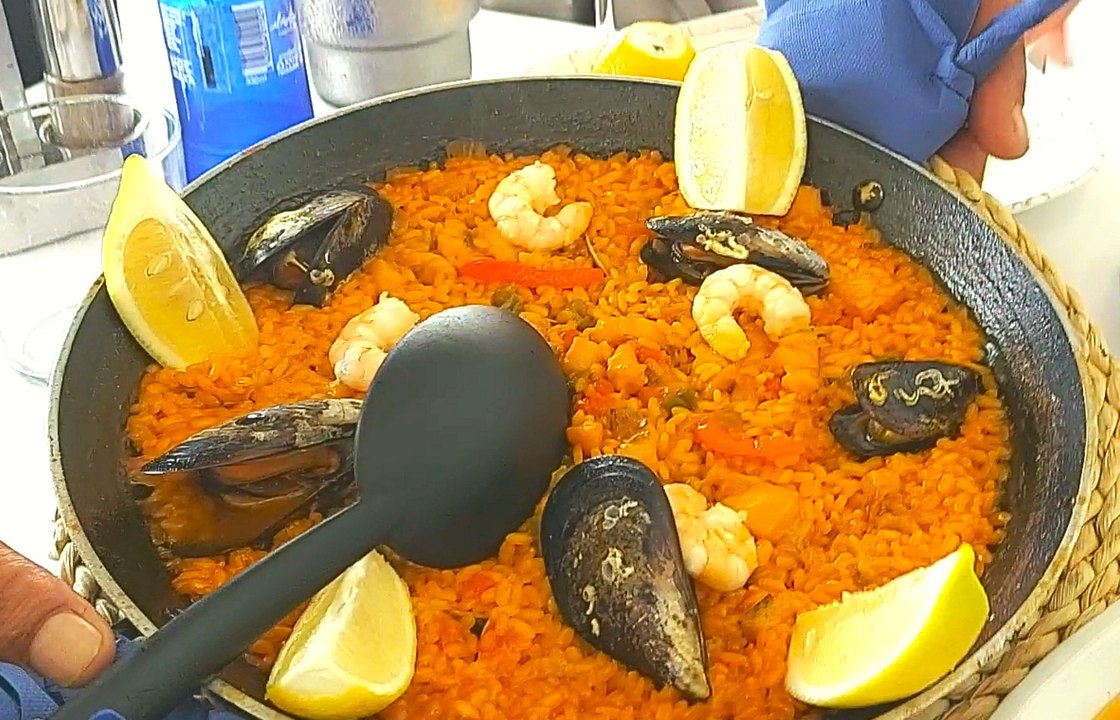
The best espetos are in the old fishing quarters of Pedregalejo and El Palo in Málaga city, but every beach town has its chiringuitos — fried fish (pescaíto frito), grilled prawns, paella and sardines, tables in the sand, feet almost in the sea. Lunch runs long here; nobody rushes you.
The coast & beaches
Where to shop: Calle Larios, markets & the marinas↑
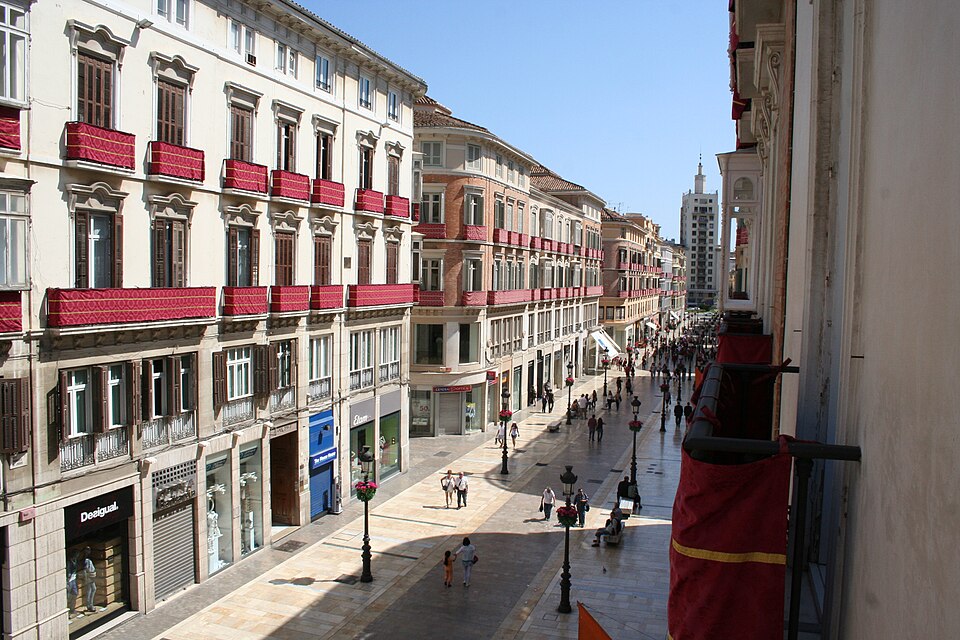
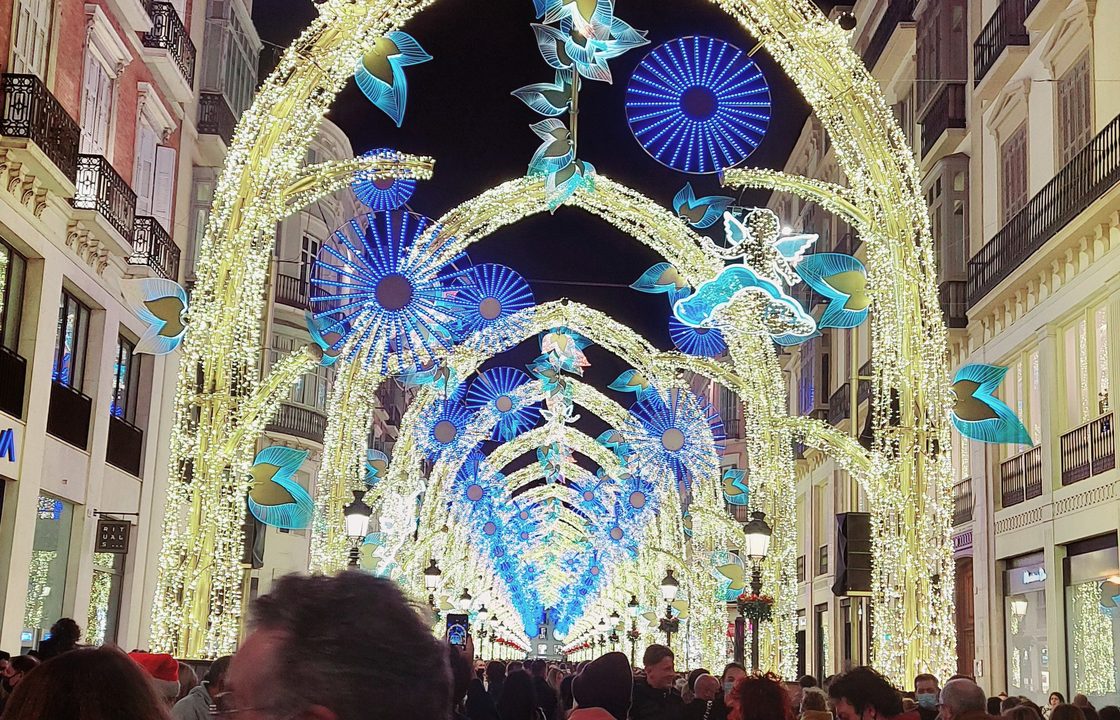
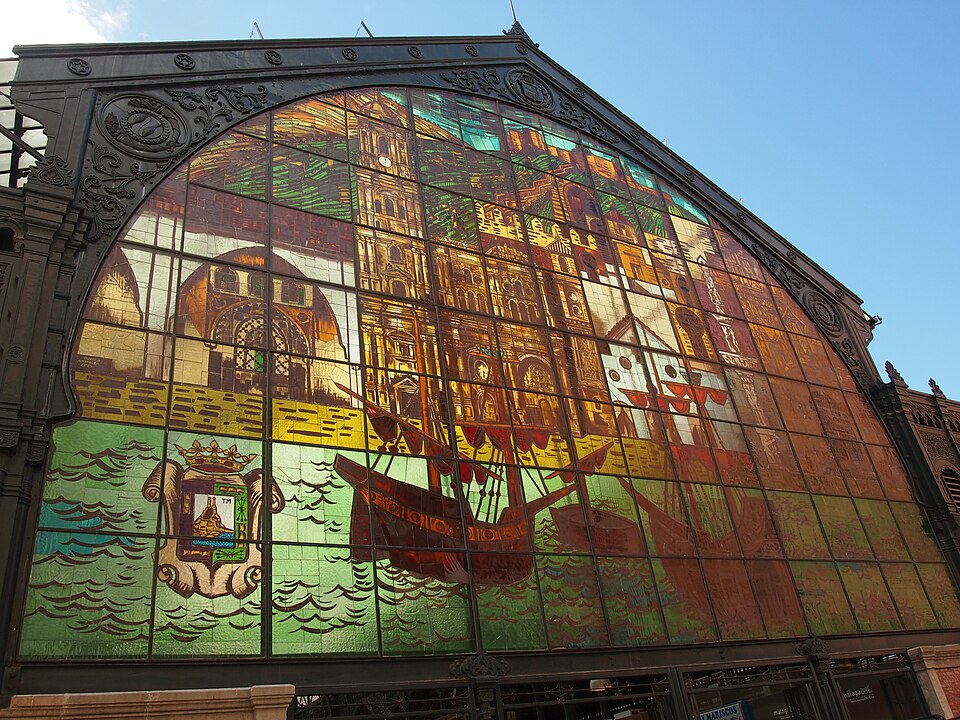
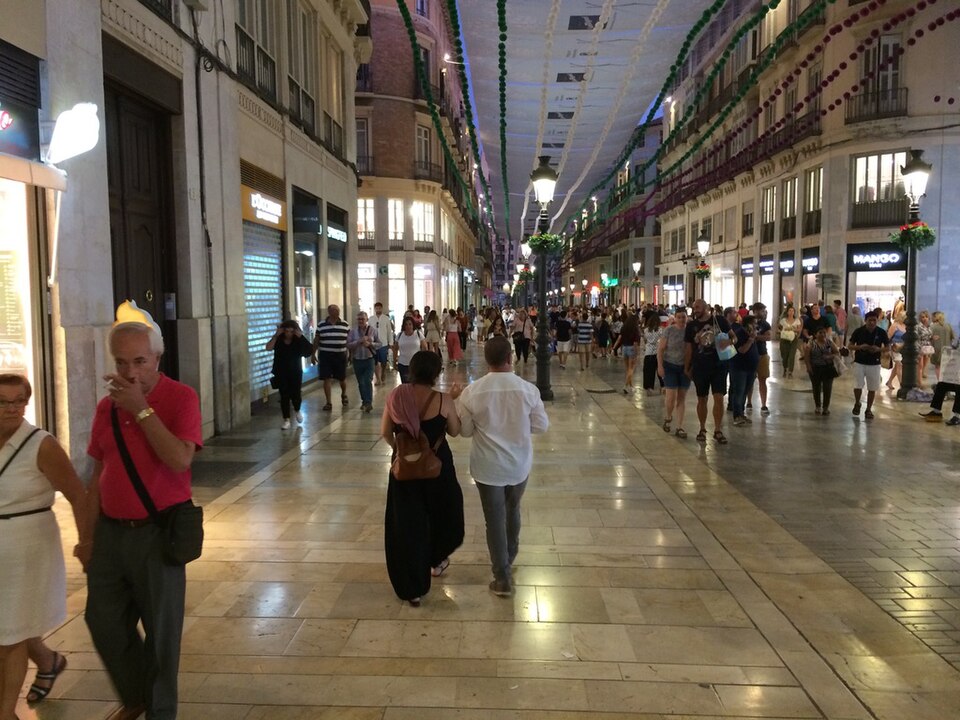
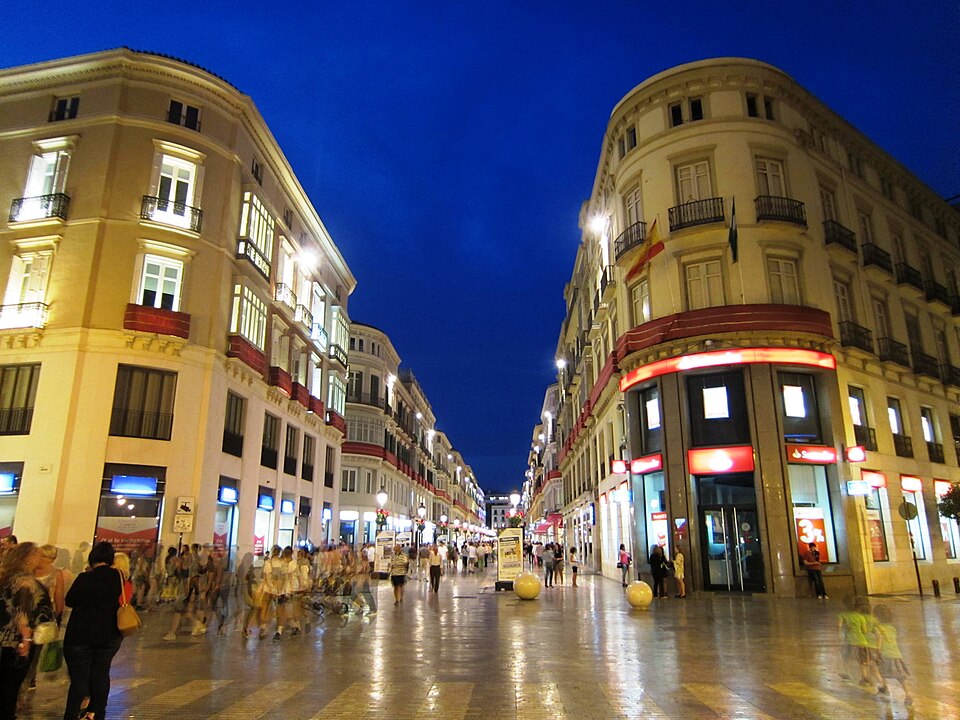
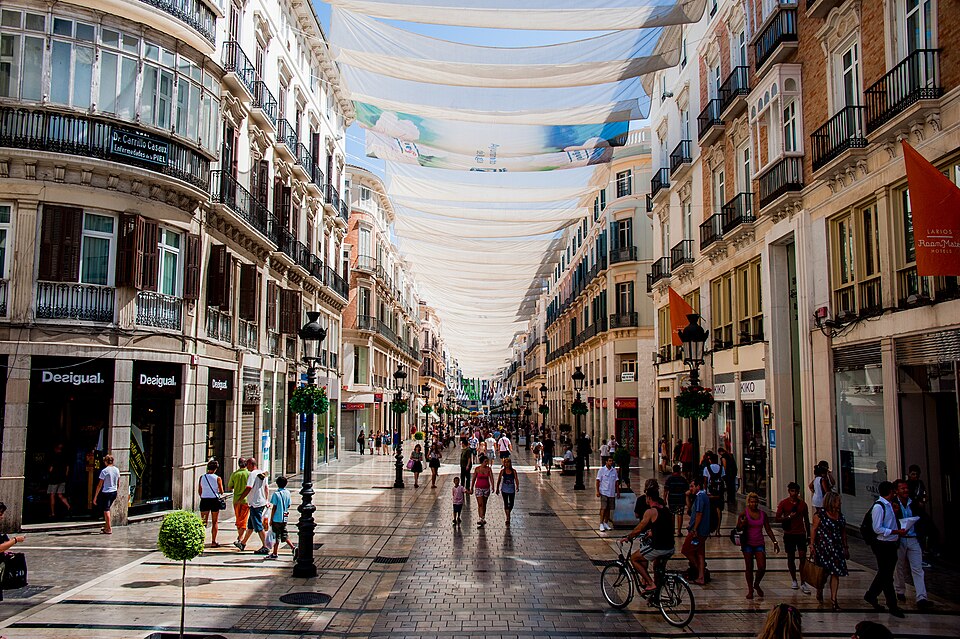
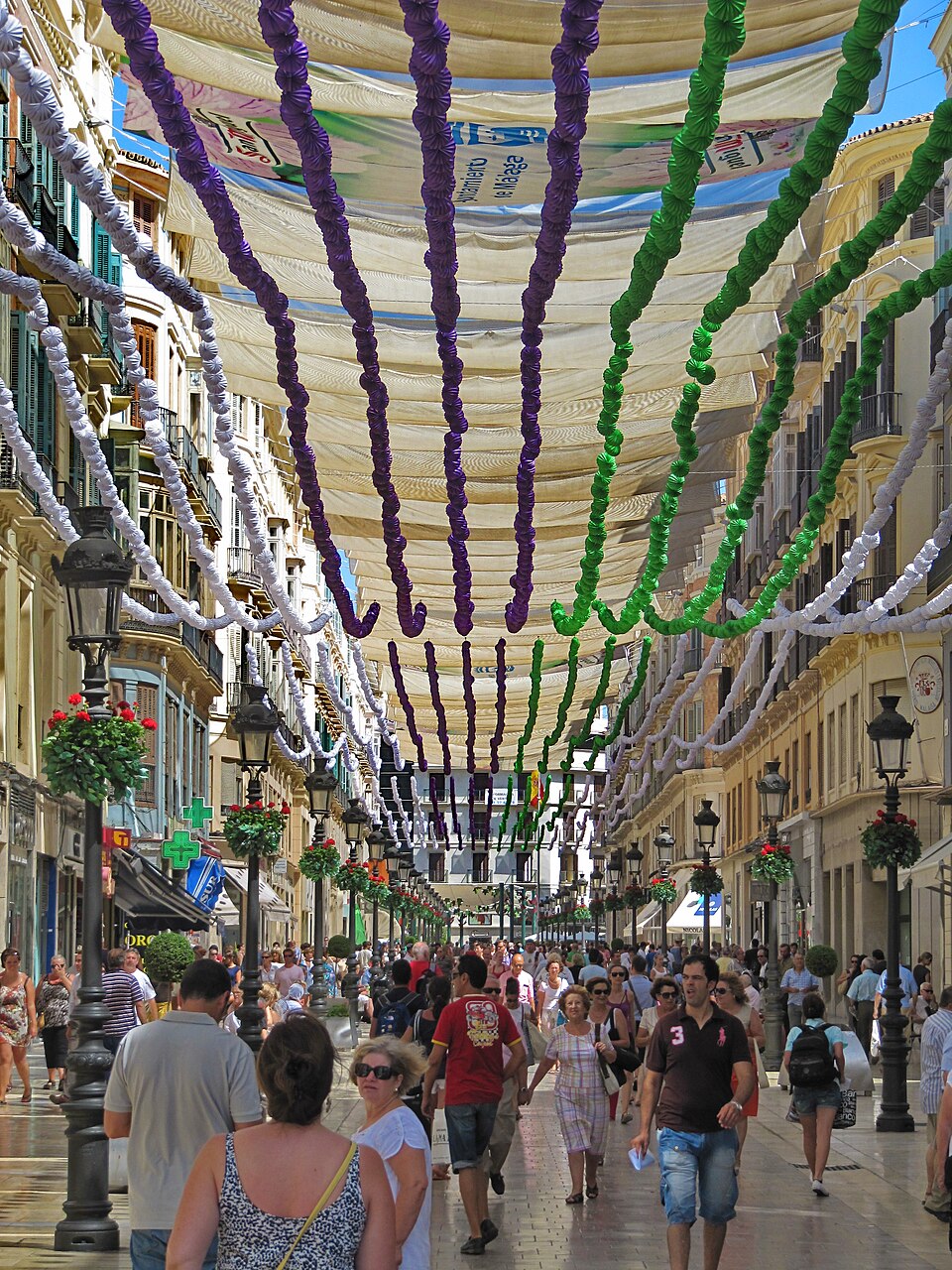
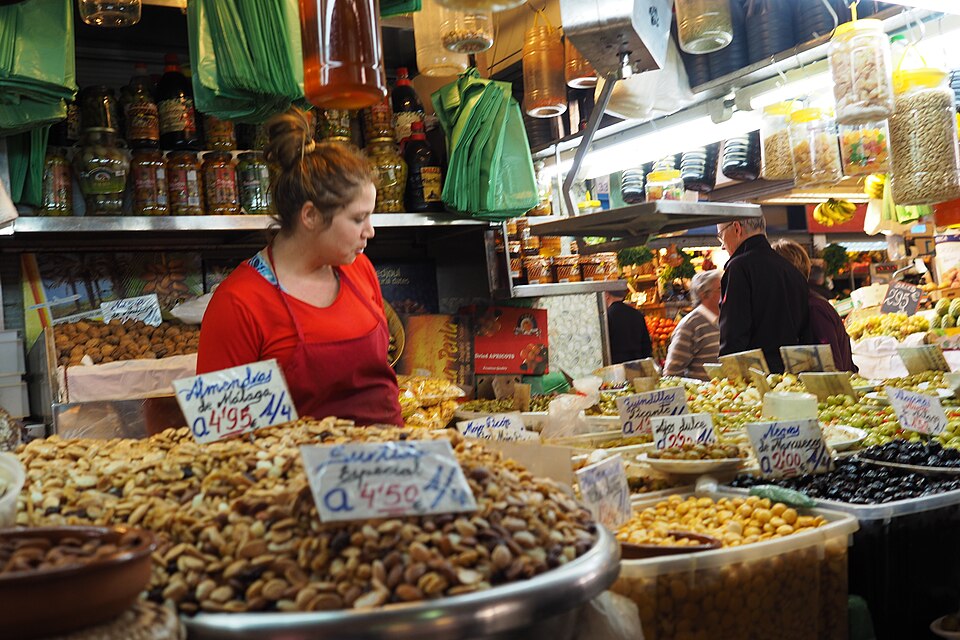
Málaga's grand shopping street is the marble-paved Calle Marqués de Larios — pedestrian and packed day and night with fashion stores, cafés and, at Christmas, a famous light show. The lanes around it hide independent boutiques, and the buzzing Soho district and Mercado de Atarazanas reward a wander: the market's iron-and-glass hall is where locals buy fruit, jamón and seafood and stop for a stand-up tapa at the bar.
On the coast, Marbella pairs the boutiques of its Old Town with the designer names of Puerto Banús, while big malls like Miramar in Fuengirola and Plaza Mayor near the airport gather the high-street brands. Most towns also keep a weekly street market (mercadillo) — Fuengirola's Tuesday market is one of the coast's biggest.
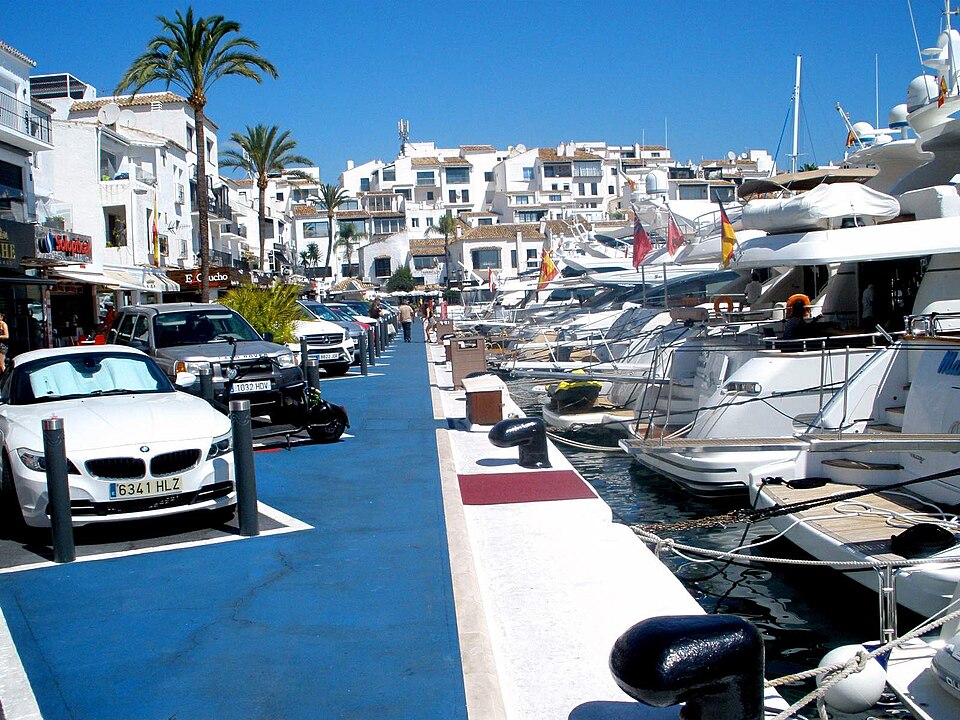
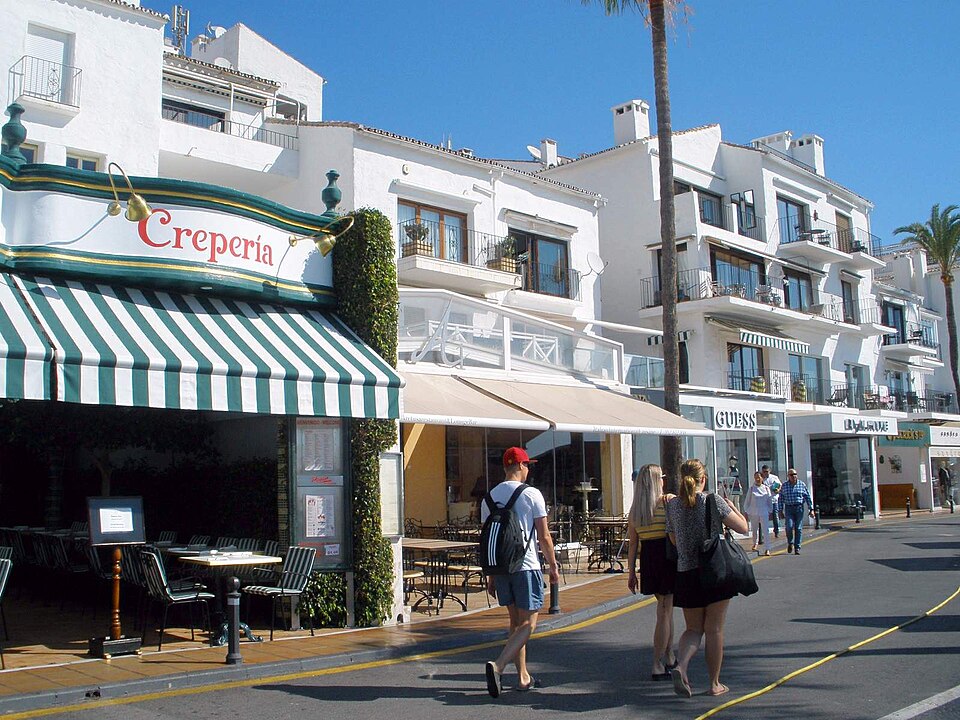
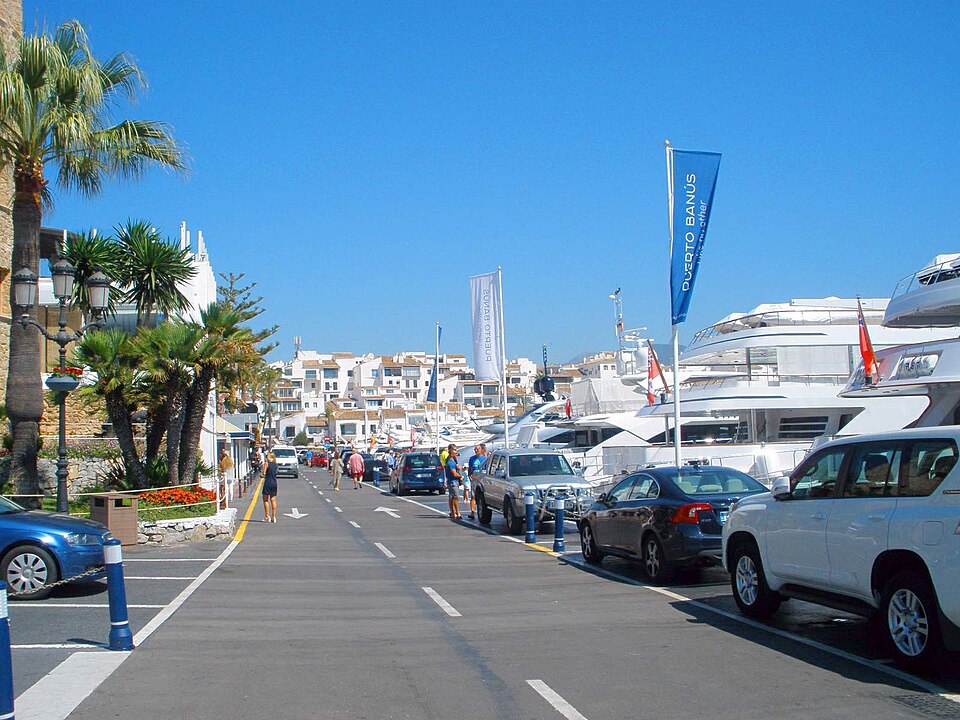
The coast is stitched together by lively marinas, each ringed with restaurants, terraces and shops. Puerto Banús in Marbella is the glamorous one — superyachts, sports cars and world-class people-watching. Puerto Marina in Benalmádena, an award-winning marina built like a little village on the water, is all bars, boat trips and nightlife.
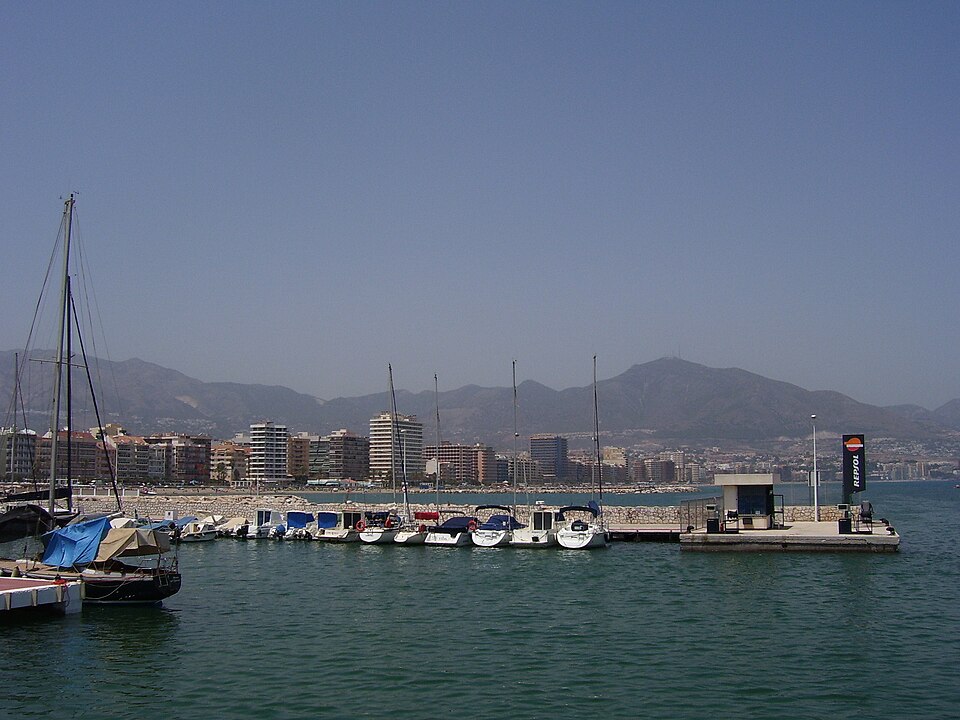
Málaga city's own Muelle Uno is a palm-lined port promenade of shops, restaurants and the Pompidou museum. Along the coast you'll also find the fishing-and-pleasure harbours of Estepona, Fuengirola, Cabopino and Torremolinos — each good for a seafood lunch and a sunset stroll by the water.
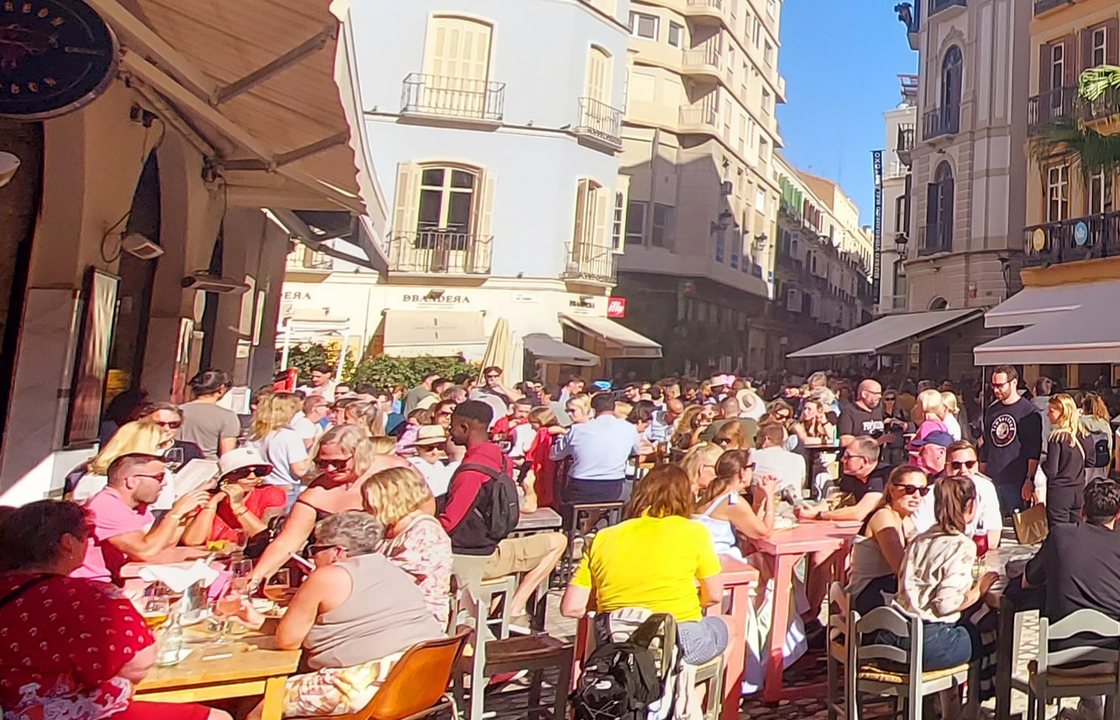
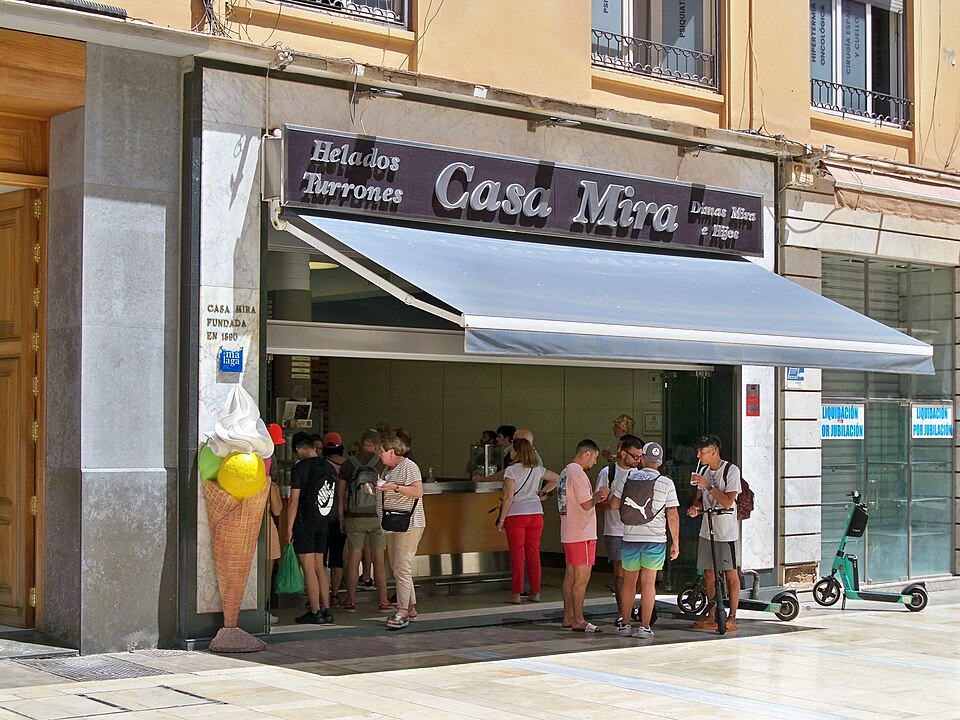
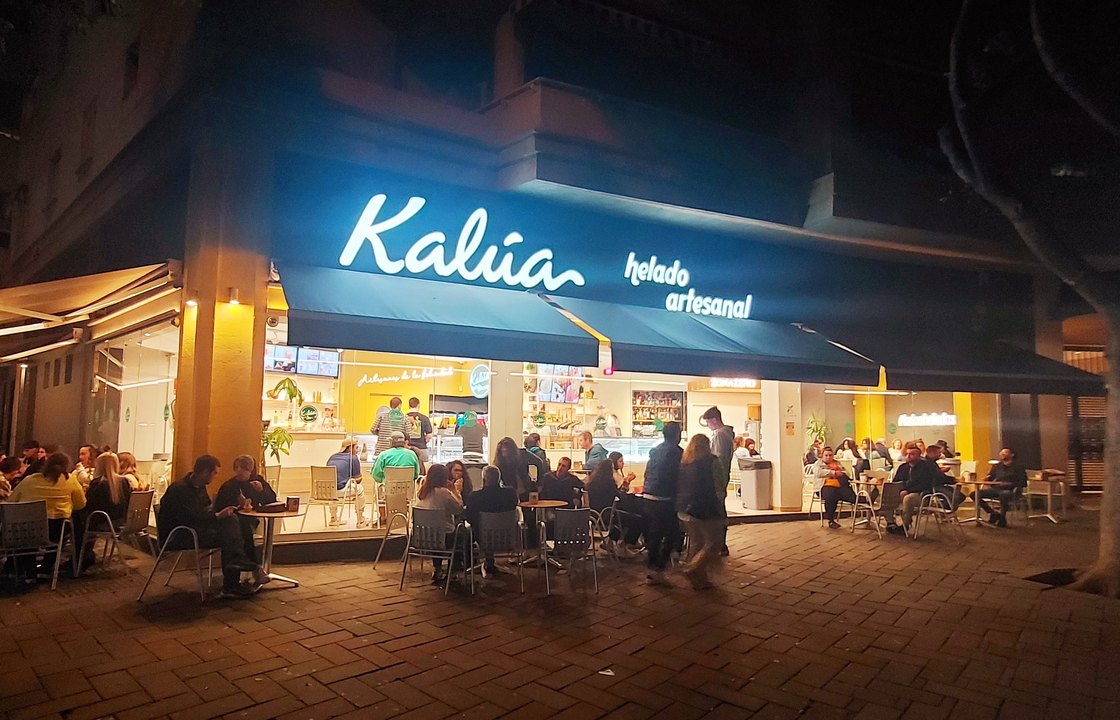
Life here happens outdoors. In the evening families take the paseo — a slow walk along the seafront promenade — stopping for an helado (ice cream) or a drink on a plaza terrace. Meals are late (lunch from 2pm, dinner from 9pm), dogs come along too, and the plazas stay busy well past midnight all summer.
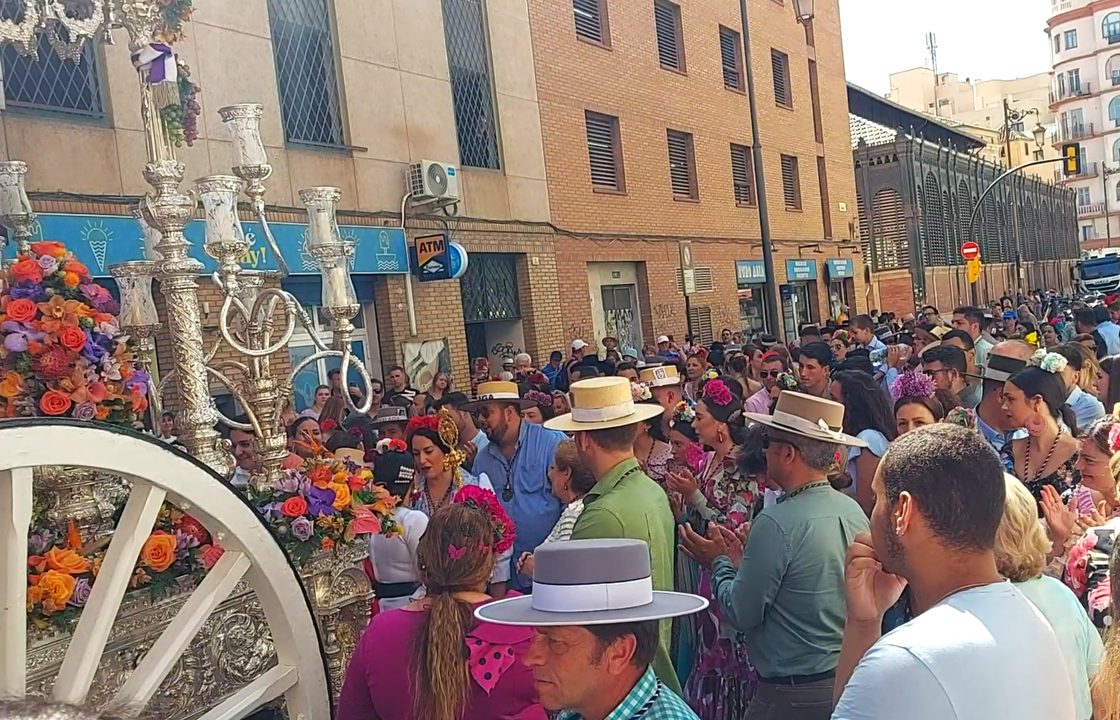
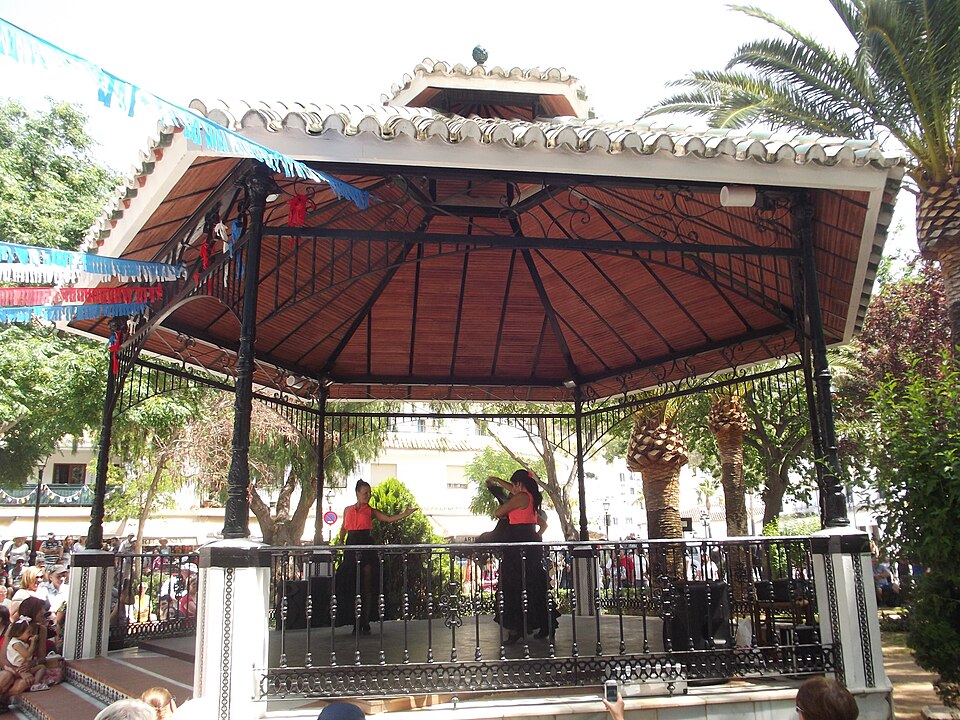
The calendar is full of ferias and fiestas: the huge Feria de Málaga in August, when the whole city dances sevillanas in flamenco dresses day and night; the candle-lit processions of Semana Santa (Holy Week); and each town's own patron-saint fair with horses, carriages, casetas and live music. Time your trip around one and you'll see the coast at its most alive.
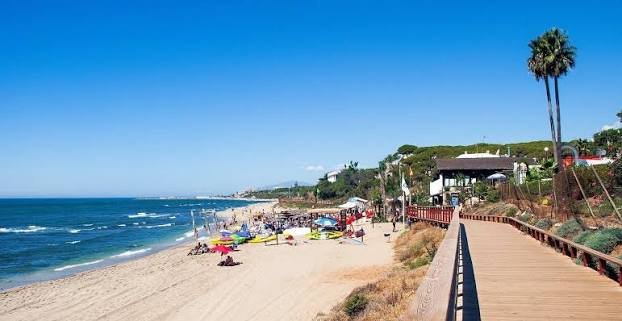
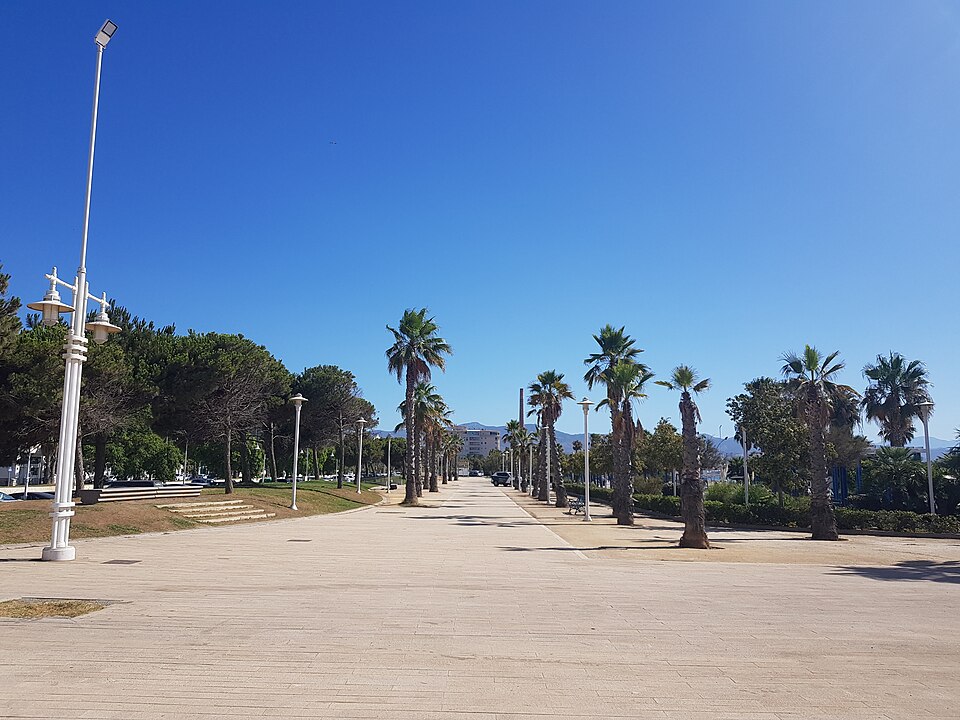
One of the coast's best free things to do is walk the senda litoral — a continuous wooden boardwalk being joined up along the whole shoreline, the sea on one side and chiringuitos on the other. The scenic stretch that runs from Fuengirola around the cliffs and coves to Mijas Costa is a genuine local must-do — flat, breezy and easy to walk or cycle.
Do note that cycling is time-restricted to protect walkers. Bikes aren't allowed on weekends or public holidays, and on weekdays they're kept off during the busiest hours — roughly 11am–2pm and 6pm–9pm. At other times riding is fine, but pedestrians always have right of way, so keep to a slow, respectful pace and check the local signage for the current timetable.
Other lovely sections cross the protected dunes at Cabopino near Marbella and run through Torremolinos and Estepona. Bring trainers, water and sun cream; early morning or the golden hour before sunset are the loveliest — and coolest — times to go.
Staying active is easy on the coast. The big Spanish chain Synergym runs modern, low-cost gyms with long opening hours and flexible passes — including Las Lagunas de Mijas (by Fuengirola), two in Málaga and one in Marbella. Other chains you'll find along the coast include Basic-Fit and VivaGym, plus the upscale O2 Centro Wellness and Holmes Place in Marbella.
Prefer to train outdoors? Nearly every seafront paseo has free outdoor-gym and calisthenics stations, and the flat promenades are perfect for a run or a cycle. Pádel is a national obsession here — courts are everywhere and easy to book by the hour — and most towns run an affordable municipal polideportivo (sports centre) with a pool, gym and classes. Many hotels also have their own gyms and spas.
Arriving on a cruise? Málaga is a regular Mediterranean port of call, and its cruise terminal sits about a 20-minute walk (or a short taxi) from the old town and the Alcazaba. If you're in port for the day, our Málaga port shore excursions gather the tours that fit a cruise call — private and small-group trips that collect you near the terminal and get you back to the ship in good time.
Popular choices for a single day ashore include skip-the-line Alhambra and Caminito del Rey, Ronda's white villages, the old town by tuk-tuk, or the coast by catamaran — all doable between docking and all-aboard. Book ahead in high season, and always leave a comfortable buffer before your ship's departure.
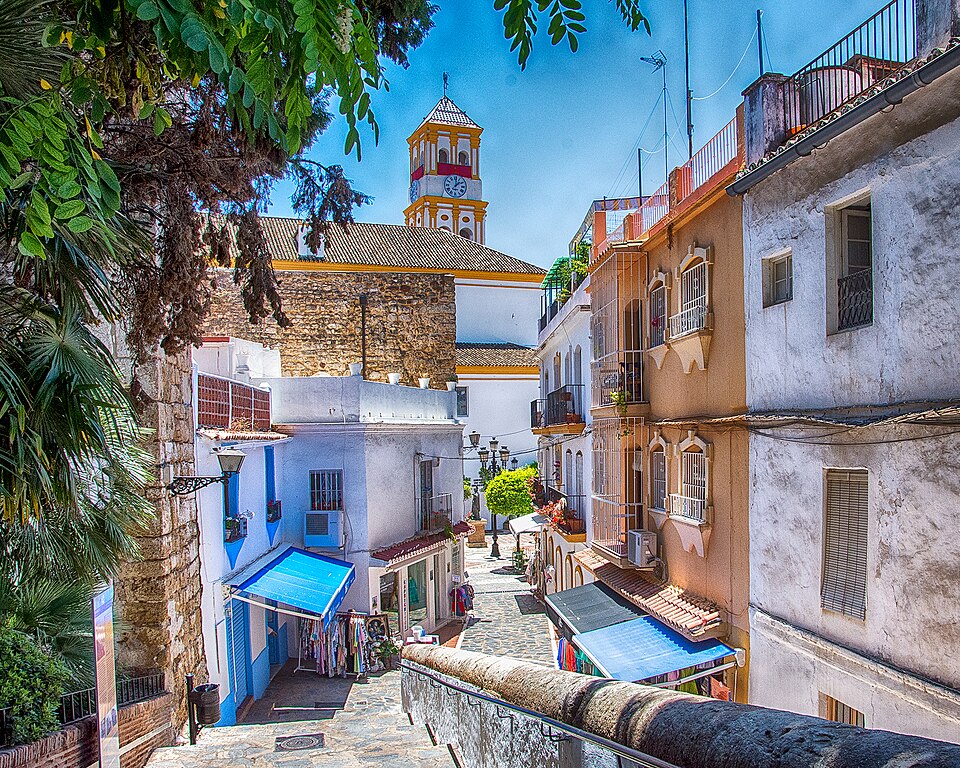
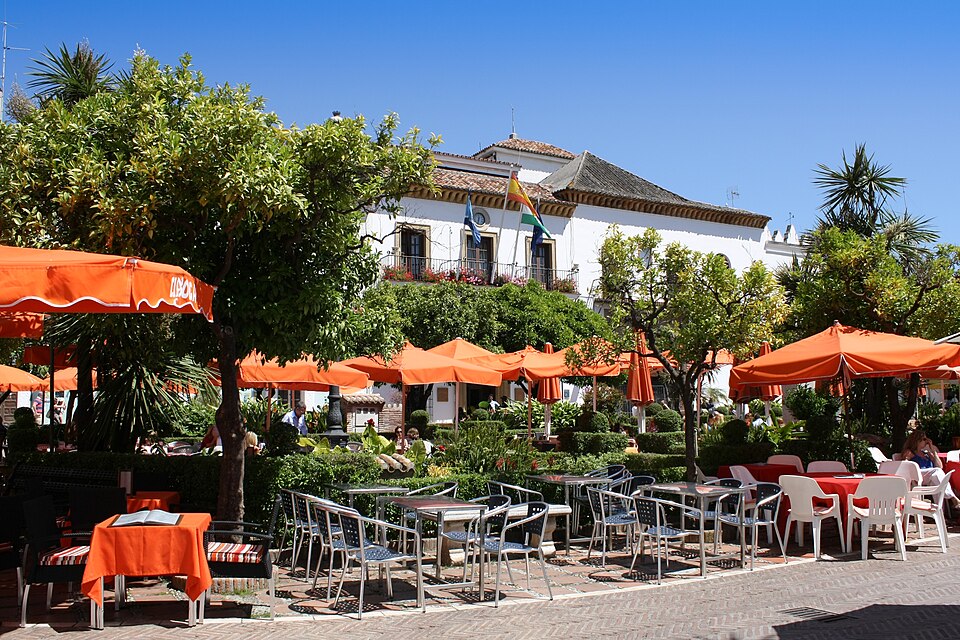
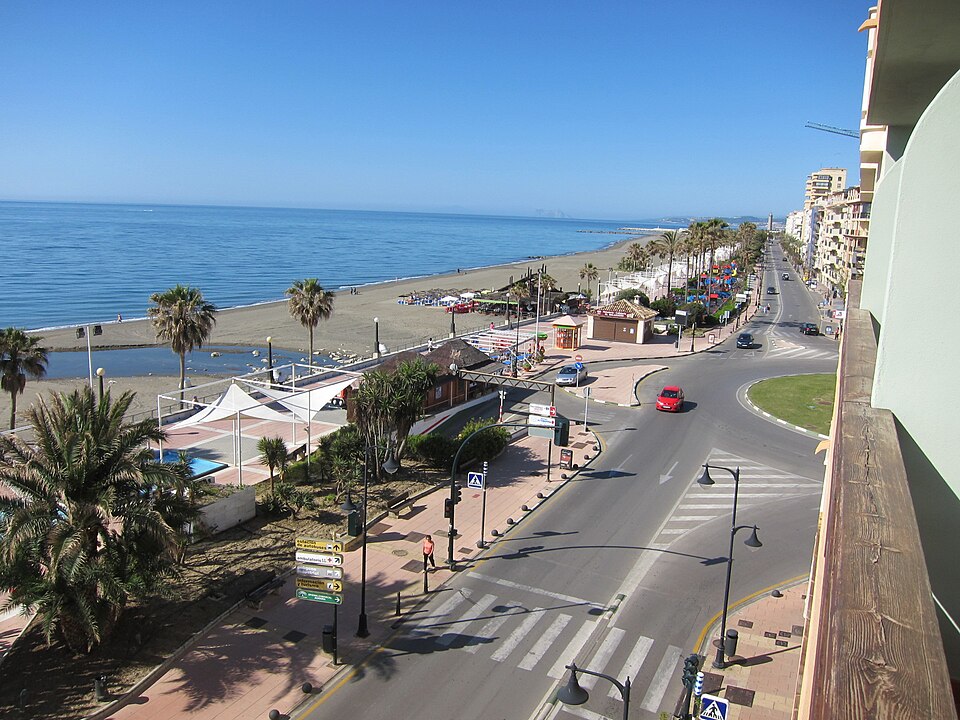
A few favourite corners of Málaga city and Costa del Sol. Photos by Málaga Tours & More and via Wikimedia Commons. More live music across Málaga →
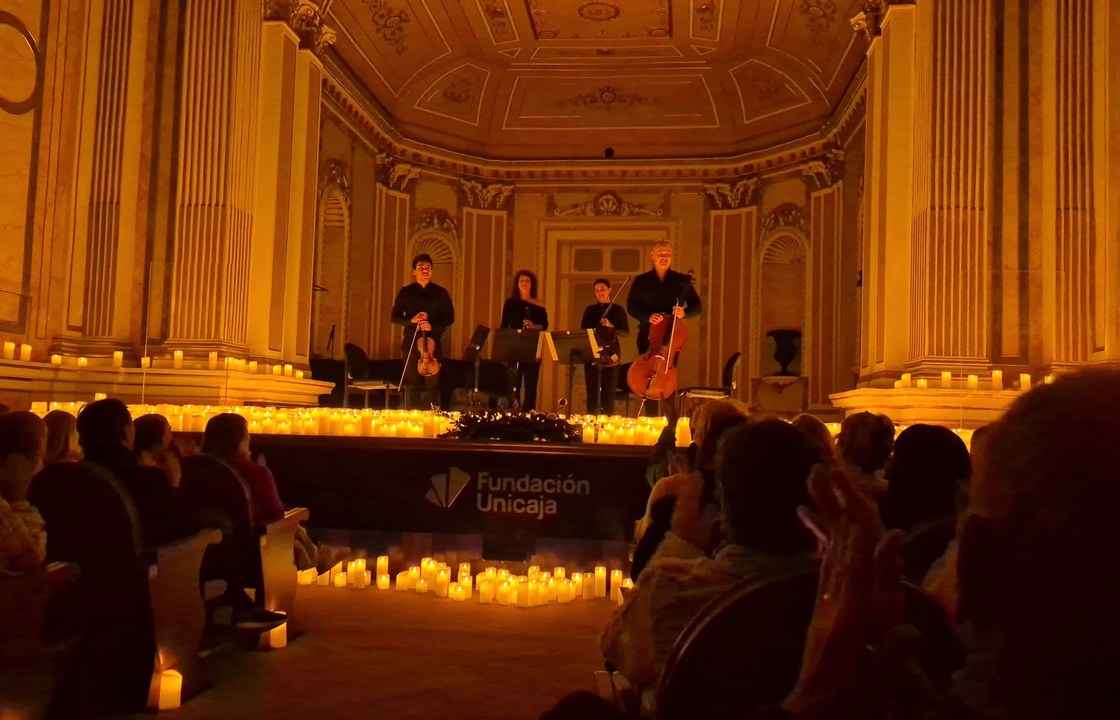
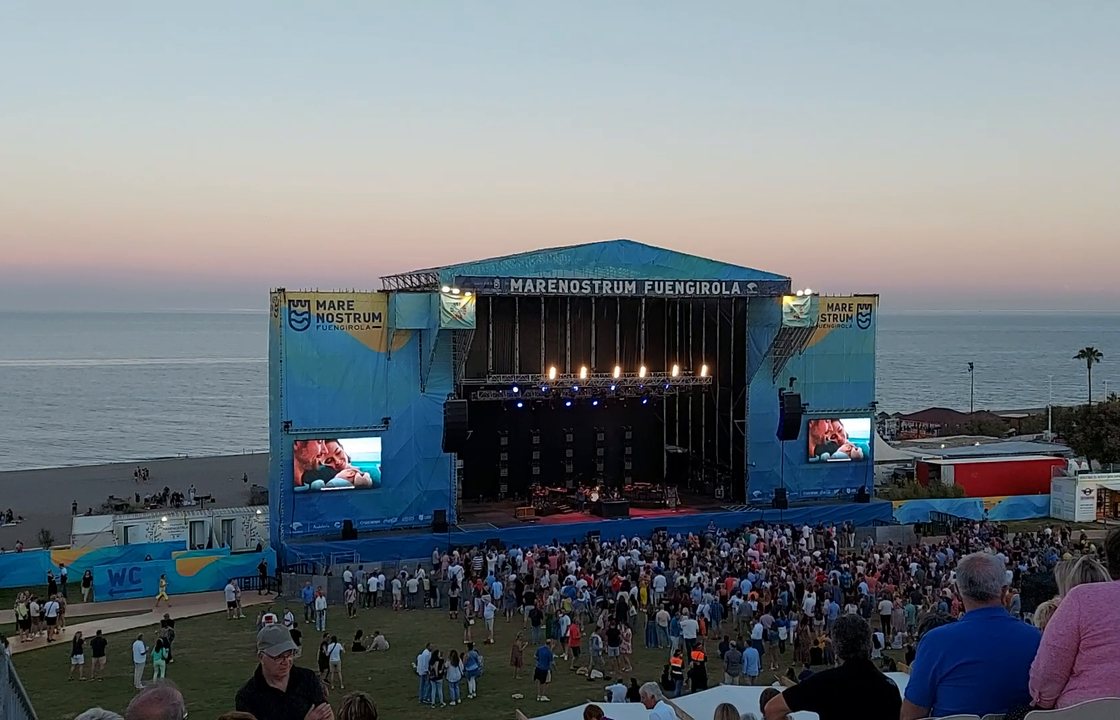
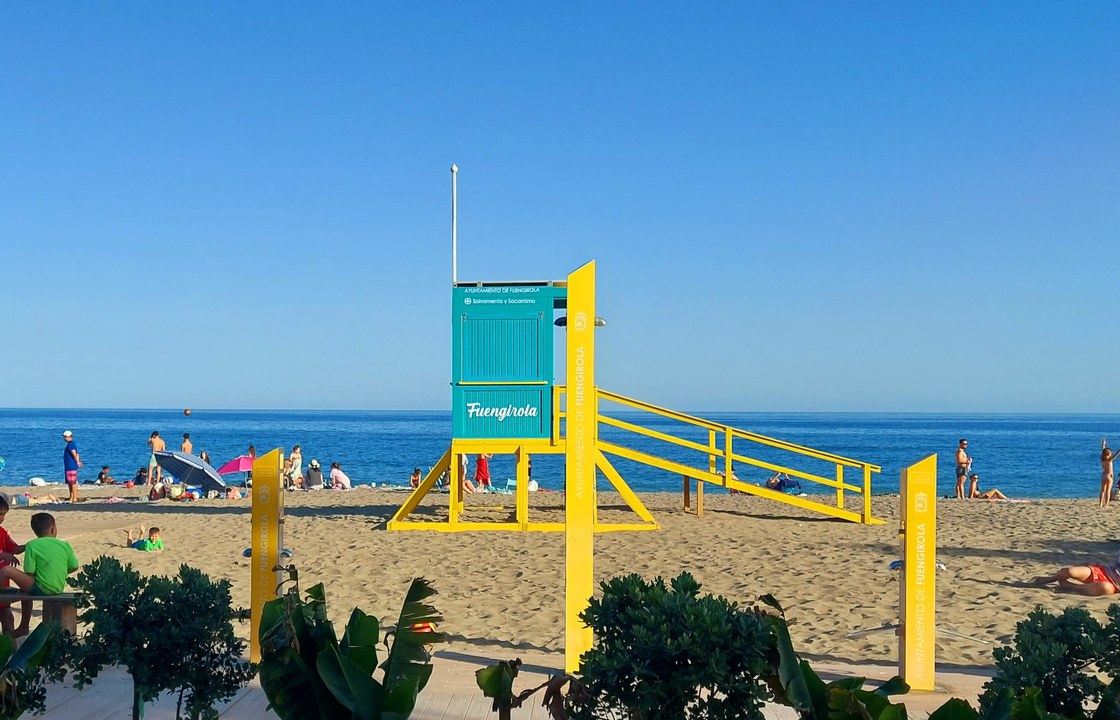
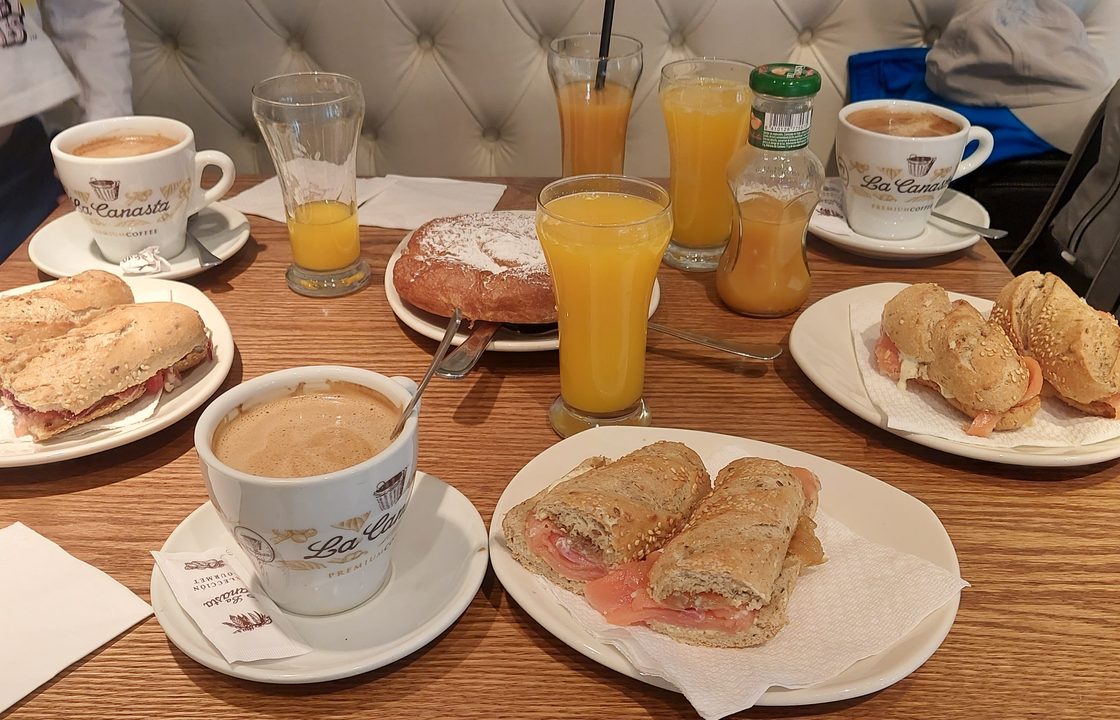
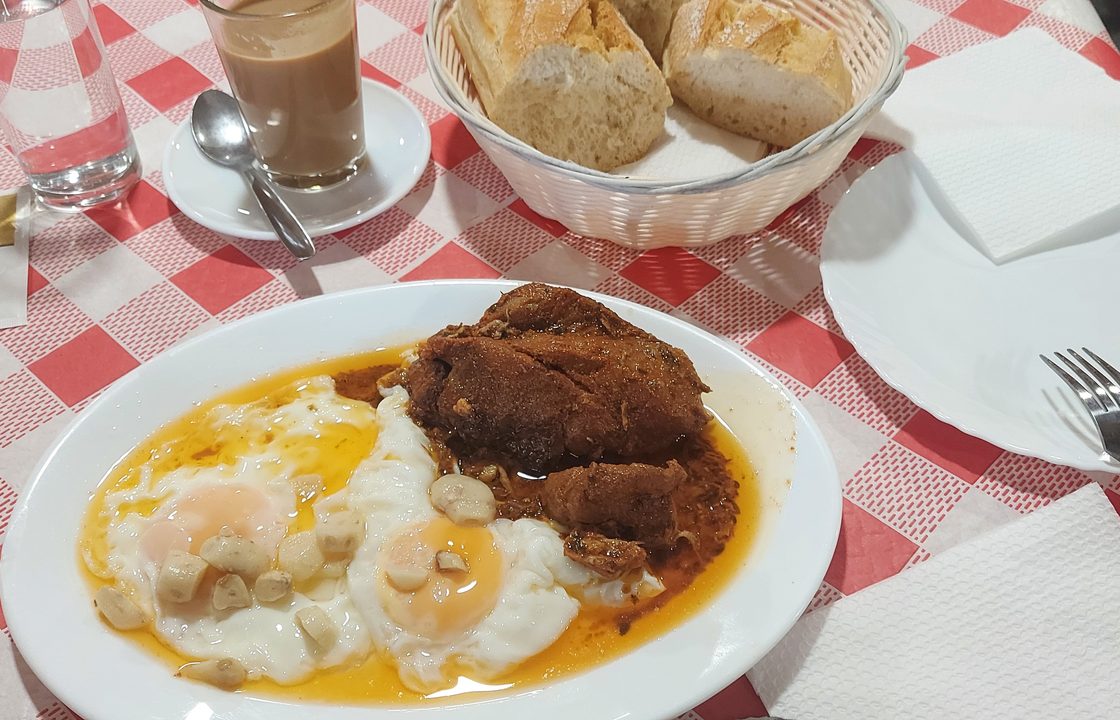
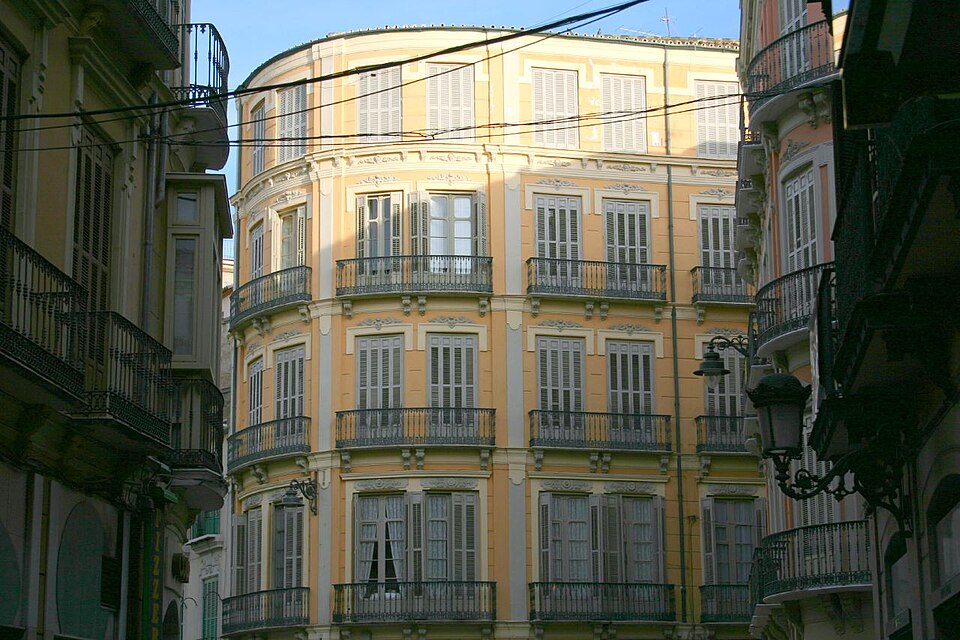
Málaga and its port from the walk up to the GibralfaroThe AlcazabaTeatro RomanoMálaga CathedralCalle LariosCandlelight string quartet concert at the Sala Unicaja María Cristina in MálagaMarenostrum evening concert by the beach in FuengirolaFamilies on Fuengirola beach by its bright turquoise lifeguard postTapas at Casa Lola on Plaza Uncibay, one of Málaga's best-known tabernasA Málaga breakfast: coffee, orange juice, "ensaimada" and salmon "flautas"Lunch tables looking straight out to sea at a Costa del Sol chiringuitoThe Christmas lights turning Calle Larios into a tunnel of archesFlamenco dresses and wide-brimmed hats behind the silver carreta at Málaga's Rocío romeríaThe Senda Litoral boardwalk winding along the shore at Mijas CostaTerraces packed with diners on Calle Granada, MálagaMálaga Cathedral from the gardens on Calle CísterMercado de AtarazanasMuelle Uno, the portPedregalejoSeafood paella at Los Marinos Paco on the Fuengirola seafrontThe promenade at Benalmádena CostaMarbella Old TownPlaza de los Naranjos, MarbellaPuerto BanúsEsteponaPlaya de Burriana, NerjaCuevas de NerjaFrigilianaMijas PuebloPuente Nuevo, RondaCaminito del ReyPescaíto fritoThe best lomo with fried eggs and garlic, Venta La Butibamba, La Cala de MijasTivoli WorldBeach life along the Fuengirola seafrontFresh espetos over a beach fire in La MalaguetaA plate of grilled sardines by the seaStrolling Calle Marqués de LariosCafé terraces on Calle Larios at duskShoppers under summer awnings on Calle LariosWaterfront café terrace at Puerto BanúsYachts and shoppers along Puerto BanúsRestaurant-lined promenade at Puerto BanúsBoats and strollers at Puerto Marina, BenalmádenaYachts in Estepona's marinaAn evening paseo along the Málaga seafrontThe daytime Feria de Málaga in full swingRevellers celebrating the Feria de MálagaA horse-drawn carriage at the Feria de MálagaFlamenco dancers in flamenco dress in the streets of MálagaA flamenco singer performing in MálagaFlamenco dancing at the Mijas bandstandA procession winding through MálagaShopping the stalls inside Mercado de AtarazanasChuletón at Mesón Asador Viñolo, ChurrianaQueuing for ice cream at Casa MiraTerrace tables outside the Kalúa ice-cream parlour in MálagaFishing boats in Fuengirola harbourStrolling the Muelle Uno promenade in MálagaMálaga old townPlaza de la MercedBalcón de Europa, Nerja
Two to three days for the city, or 5–7 days to add the coast and a couple of day trips like Ronda or the Caminito del Rey.
Do I need a car on Costa del Sol?
Not for Málaga city or the western beach towns (Torremolinos, Benalmádena, Fuengirola), which are on the frequent C-1 coastal train. A car helps for Marbella, Nerja, Ronda and the white villages.
What's the best area to stay?
Málaga city for culture and tapas; Marbella for glamour; Fuengirola or Torremolinos for easy family beaches on the train; Nerja for a quieter, prettier base. See our hotels guide for each area.
When is the best time to visit?
May, June, September and early October — warm and sunny but far calmer than peak July–August. The sea is warmest in September, and winters are mild and bright.
Can you swim in the sea in winter?
It's cool but doable for the hardy from about November to April; comfortable swimming is roughly May to October, warmest in late summer.
How do I get from Málaga airport to the city?
The C-1 train from the airport reaches Málaga Centro in about 12 minutes and runs west to Fuengirola; there are also express buses, taxis and pre-booked transfers.
Is Málaga expensive?
No — it's good value by Western-European standards. A menú del día lunch is a few euros and drinks are cheap; tipping is modest.